
I landed in Egypt with one enormous advantage: an Egyptian sister-in-law who has been feeding me ful medames for years. While most vegans arrive squinting at menus, I arrived with a shopping list.
Egypt is still hard work for vegans. I gave it a 2 out of 5 in my two-week reality check and I stand by it. But here’s the twist: the food that IS vegan there is some of the best you’ll eat anywhere. So, what can vegans actually eat in Egypt? Dish by dish, this is what fed me for two weeks.
The dishes
Ful medames
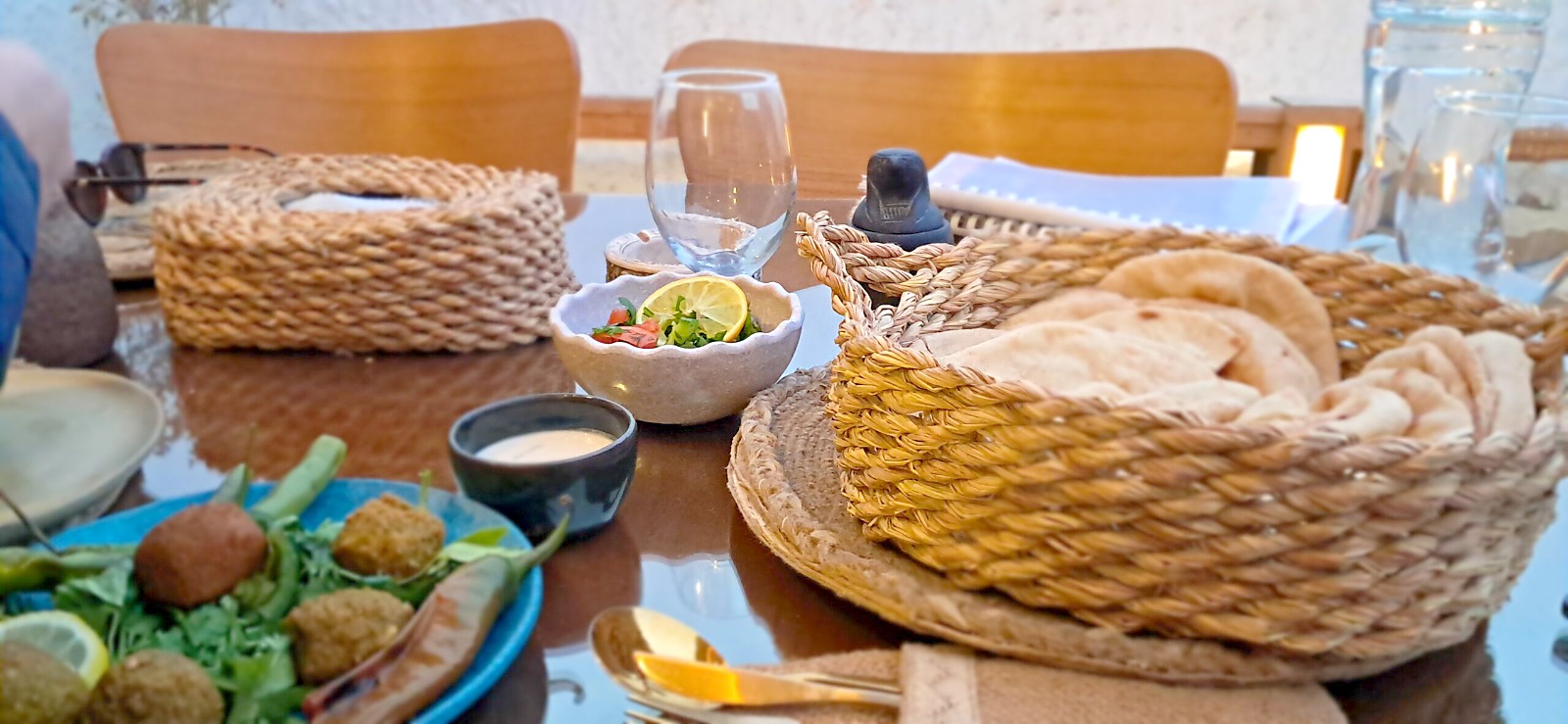
Slow-cooked fava beans with oil, lemon and cumin, and my honest answer to “best thing you ate in Egypt”. At Pyramids Top Inn it came as part of a breakfast with ta’ameya, flatbread, salad and fruit, eaten on a terrace staring straight at the Pyramids. Scoop it up with warm bread and very little else in life matters.
Ta’ameya
Egyptian falafel, made with fava beans instead of chickpeas and packed with herbs, so it comes out green in the middle. The texture is smoother than any falafel I’ve had at home, and as a vegan of fifteen years I have had a lot of falafel. This is the good stuff.
Aish baladi
The flatbread that arrives with everything. As far as I could tell it’s reliably vegan (flour, water, bran), and I ate mountains of it without ever being let down.
Warak dawali
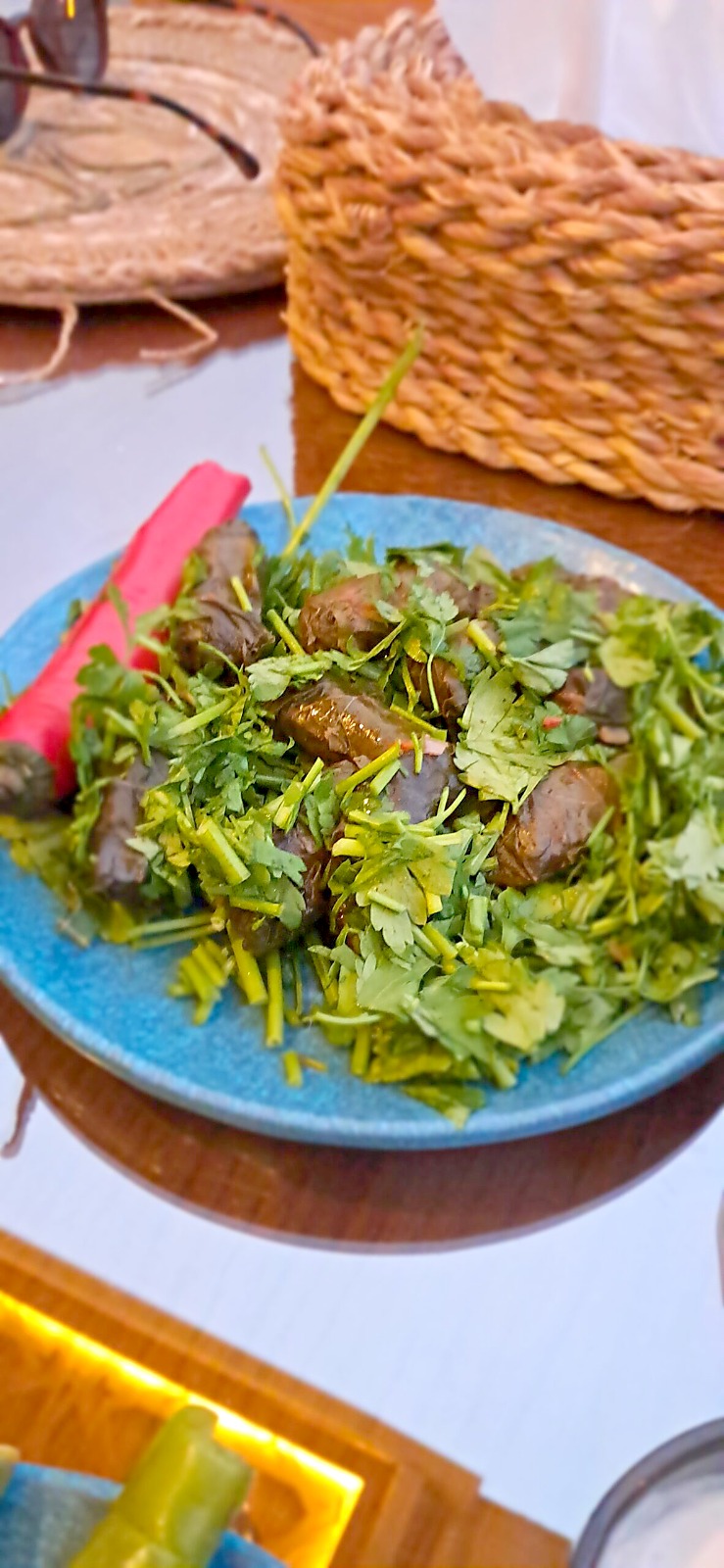
Vine leaves stuffed with herby rice. I knew them as dolmades from Greece; in Egypt they’re warak dawali, and the ones at Pyramids Cave Lounge were a highlight. The rice-stuffed version is traditionally vegan and everywhere, though meat-stuffed versions exist across the region, so a quick ask never hurts.
Koshari
Egypt’s national dish: rice, lentils, pasta and chickpeas under spiced tomato sauce and crispy onions. Naturally vegan, nationally beloved. Now for some honesty nobody else seems willing to offer: I had koshari at Pyramids Cave Lounge and thought it was fine. Just fine. I’d been promised a life-changing carb event and received a solid lunch. I preferred the ful, the ta’ameya and the vine leaves.
The caveat: I never had the street version, which by all accounts is the real thing. I avoid street food when I travel (my gut carries scars from other countries), and I say that without judgement, because I watched locals and the papyrus sellers outside the sites demolishing bowls of it that looked considerably better than mine. Street koshari costs around 30 to 80 Egyptian pounds, roughly a pound or two. Tourist restaurants charge four times that for the same bowl. If your stomach is braver than mine, you know where to start.
Hummus and the eternal buffet salads
On every tourist buffet in the country: hummus, cucumber and tomato salads, beetroot, rice, chickpeas. Dependable rather than thrilling. I’ve written about surviving them on a Nile cruise buffet in detail.
The traps (and the labels that save you)
The bread is safe. The rice sometimes isn’t: it can be cooked with butter, ghee or meat stock, and you won’t know by looking. Ask. General knowledge says the same about molokhia (the green soup, often made on chicken broth) and baba ghanoush (occasionally cut with yoghurt), though I didn’t test either myself.
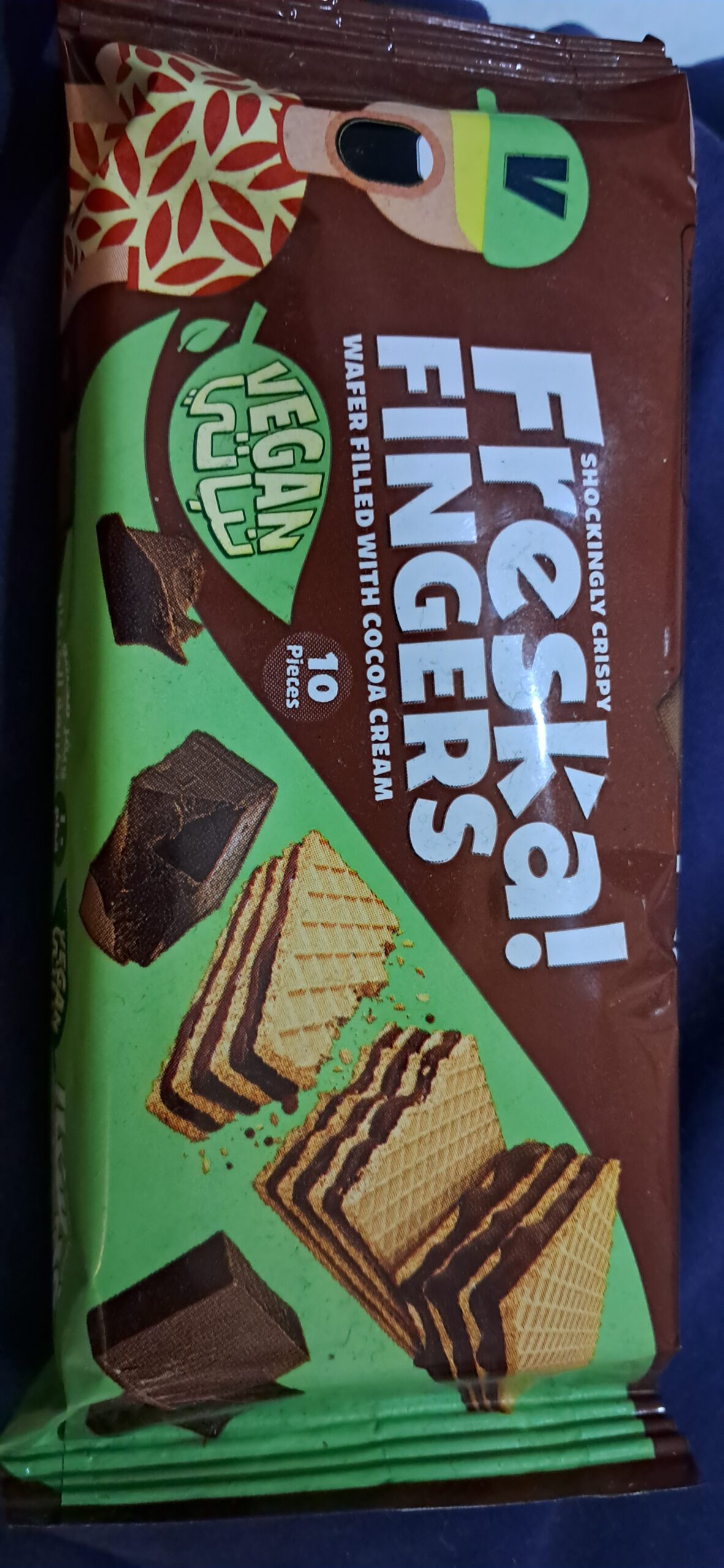
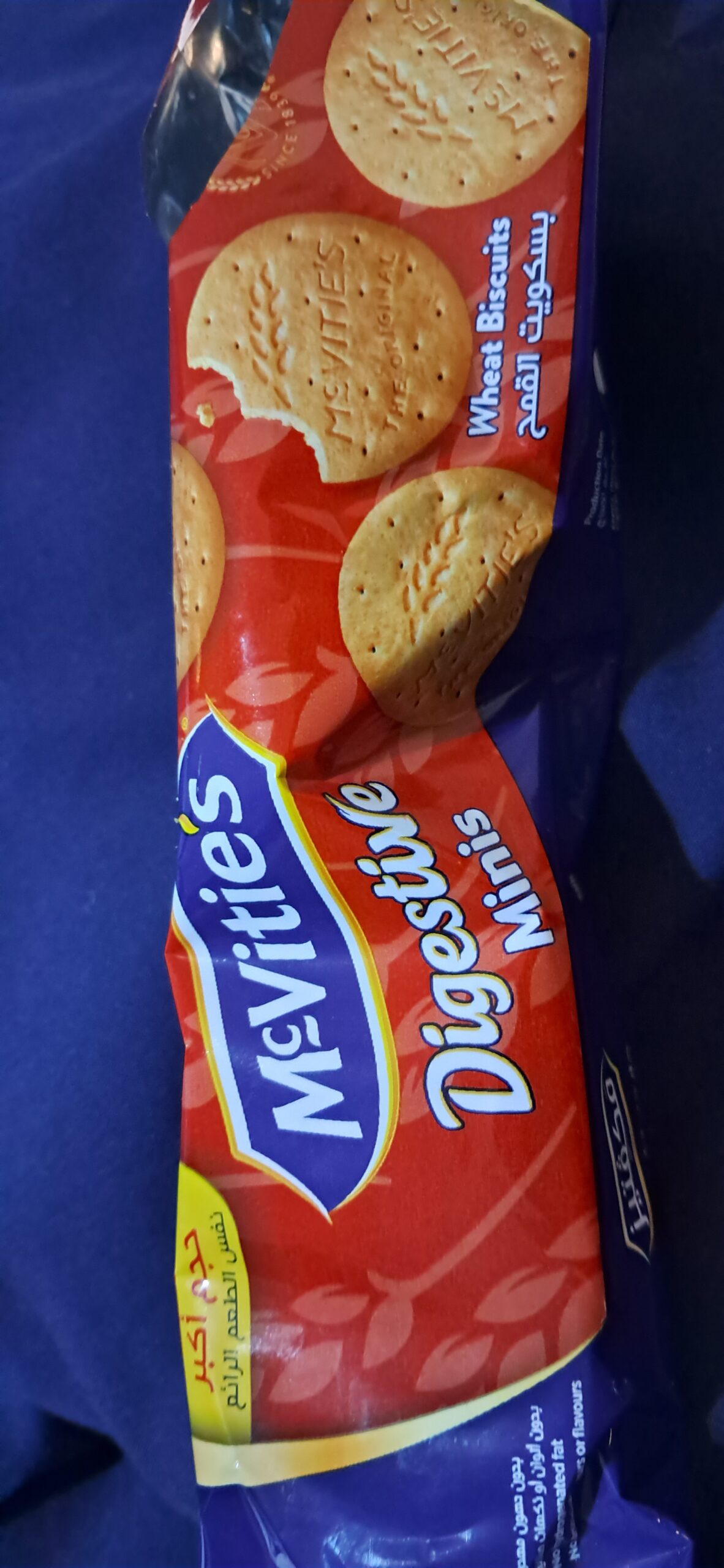
My actual strategy was less glamorous: eat at restaurants that understood the brief, and stock up on labelled snacks. Here’s something nobody told me: Egyptian corner shops are quietly good at this. I found chocolate wafer fingers with a vegan flag printed right on the pack, McVitie’s digestives that checked out, and date-filled pastry rolls that are vegan by ingredients. Everything lists ingredients in English as well as Arabic, so you can stand in the aisle and read for yourself. I did, often.
Oddest discovery of the trip: the gift shop at Abu Simbel is essentially a posh organic store. Shelves of vegan snacks, prices to match the location. If you’re there anyway (and you should be), stock up.
Hotel breakfasts: you will always get fed
Every hotel managed a vegan breakfast, with variations on a theme: Egyptian bread with jam, ful, falafel, and one heroic morning, a plate of chips. I picked the Penguin Village hotel in Dahab specifically because its Booking.com listing promised a vegan breakfast. It delivered one every single day, included in the price: a quiet miracle by Egyptian hotel standards. Nobody ever sent me away hungry. Repetition, yes. Hunger, no.
Dahab is the cheat code
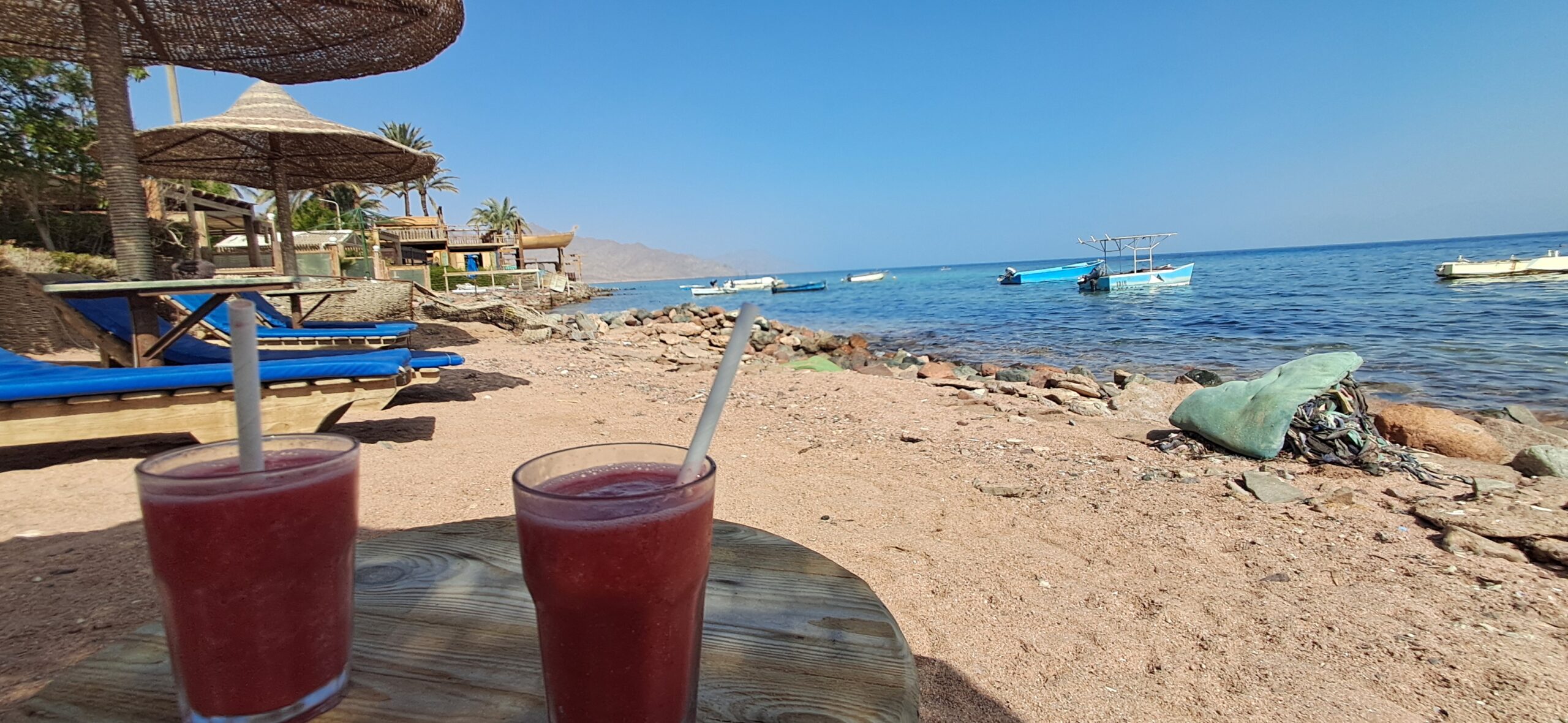
If Cairo is hard mode, Dahab is the tutorial level. It’s the only place in Egypt with a genuine vegan scene: The Vegan Lab does tofu wraps, vegan burgers, muffins, cookies and proper coffee with plant milk, and Eldorado Lodge, an Italian-run beachfront spot near Eel Garden, served me a vegan pizza better than most I’ve had in the UK. It’s more westernised than Egyptian, which after ten days of hummus is exactly what you want. The town is also comprehensively staffed by cats, which I count as a feature. Full Dahab guide coming soon.
So, what can vegans eat in Egypt? The short version
Ful, ta’ameya, aish baladi, warak dawali, koshari, hummus, and an honourable mention for vegan-labelled corner-shop biscuits. You will not starve. You will eat repetitively but well. Learn those first four dish names before you fly and you’re most of the way there.
Quick answers
Is koshari vegan?
Almost always, it’s rice, lentils, pasta, chickpeas, tomato sauce and fried onions. Worth confirming nothing’s been added, but it’s one of the safest orders in Egypt.
Is Egyptian bread vegan?
Aish baladi is made from flour, water and bran, so yes, as standard. It was the one thing I never had to question.
Is ta’ameya vegan?
Traditionally yes, it’s fava beans and herbs. Egg occasionally sneaks into some recipes as a binder, so if you can, ask.
Heading to Egypt? Start with the two-week reality check, then the vegan Nile cruise guide. And if you’ve found a dish I missed, tell me. I’ll be back (there’s a sister-in-law situation), so my list is still growing.
Food is half the battle. The full picture is in my guide to ethical travel in Egypt.
