
Egypt gets a two out of five from me for vegans. I want to lead with that because it matters. It’s also a country I’d rank among the best places I’ve ever visited, which tells you something about how brilliant Egypt is as a destination, and how much work you’ll be putting in to eat well while you’re there.
I spent two weeks in January 2026 across two tours and four nights in Dahab. The first was a private Cairo tour with Marko Egypt, covering the Pyramids, day trips to Alexandria and Fayoum Oasis, and some of the less-visited sites around Cairo. The second was a Nile cruise with Timeless Tours from Cairo down to Aswan, taking in Abu Simbel, Luxor, and the Valley of the Kings. Both tours were booked through TourRadar. After the tours ended, I spent four nights decompressing in Dahab on the Red Sea coast, which turned out to be the only place in Egypt with anything resembling a vegan scene.
I’m going to cover the food in each of those contexts, because the experience varies quite a bit depending on where you are and who’s taking care of the logistics.
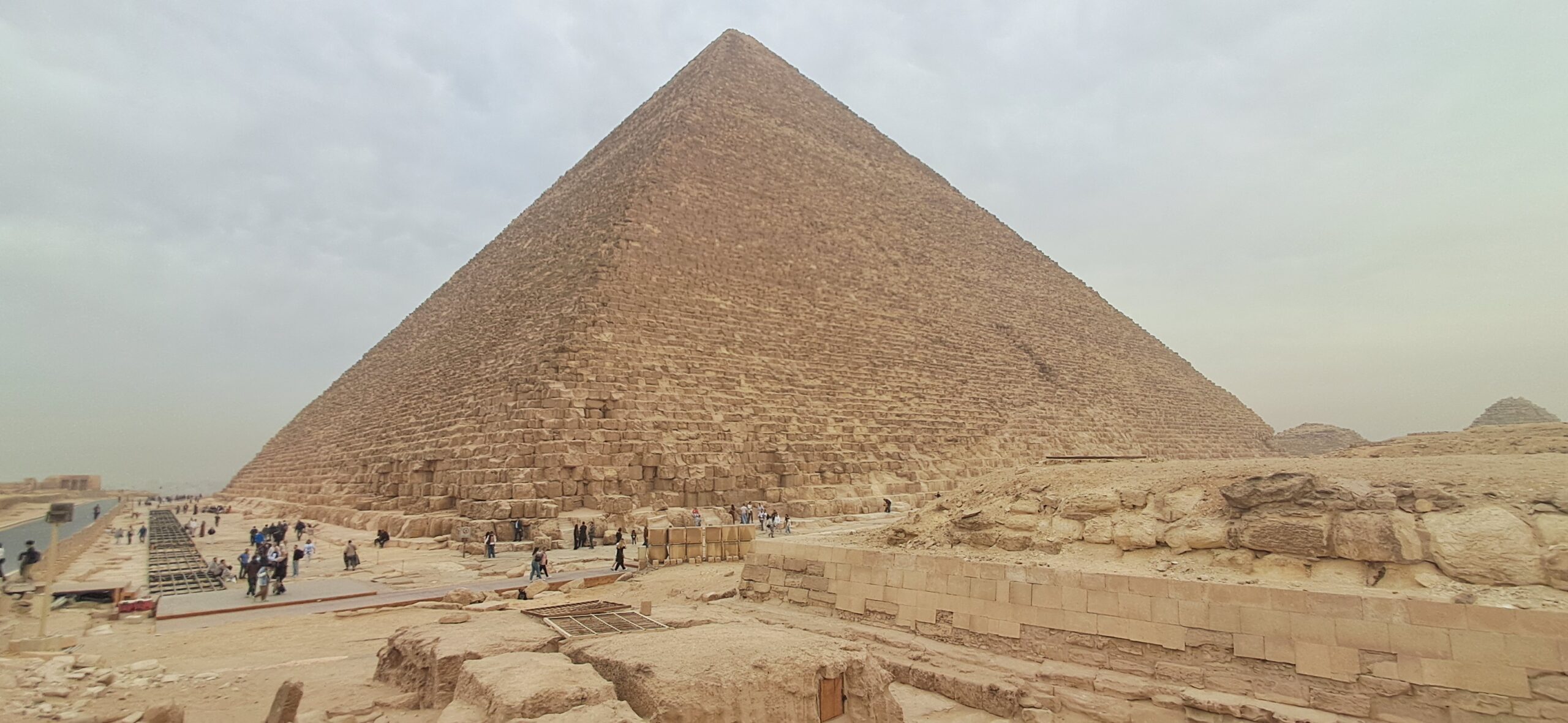
The Good News: Egypt Has Accidentally Vegan Food
Egyptian food has a genuinely strong plant-based foundation, and this is what saves you. The staples are naturally vegan and they’re available pretty much everywhere.
Ful medames is slow-cooked fava beans with olive oil, lemon, garlic and spices. It’s one of Egypt’s most traditional dishes and it’s delicious. My sister-in-law is Egyptian and makes it at home, so I already knew what I was in for, but if you’ve never had it, it’s the kind of thing that makes you wonder why it isn’t everywhere.
Ta’ameya is Egypt’s version of falafel, made from ground fava beans rather than chickpeas. Denser and more flavourful than the chickpea version. You’ll find it everywhere.
Koshari is Egypt’s national dish and it’s fully vegan by default: lentils, rice, macaroni, chickpeas, topped with a spiced tomato sauce and crispy fried onions. It’s hearty, filling, and cheap. I had it several times at a restaurant near our hotel in Giza. I have to say I wasn’t blown away (it might have been the place) but I was genuinely glad to have something with protein that I knew I could eat.
Egyptian flatbread is also accidentally vegan, as is most of the basic salad situation you’ll encounter at buffets: plain cucumber, tomato, beetroot, no dressing. Stuffed grape leaves (warak dawali) are usually vegan too, though it’s worth asking since some are made with minced meat.
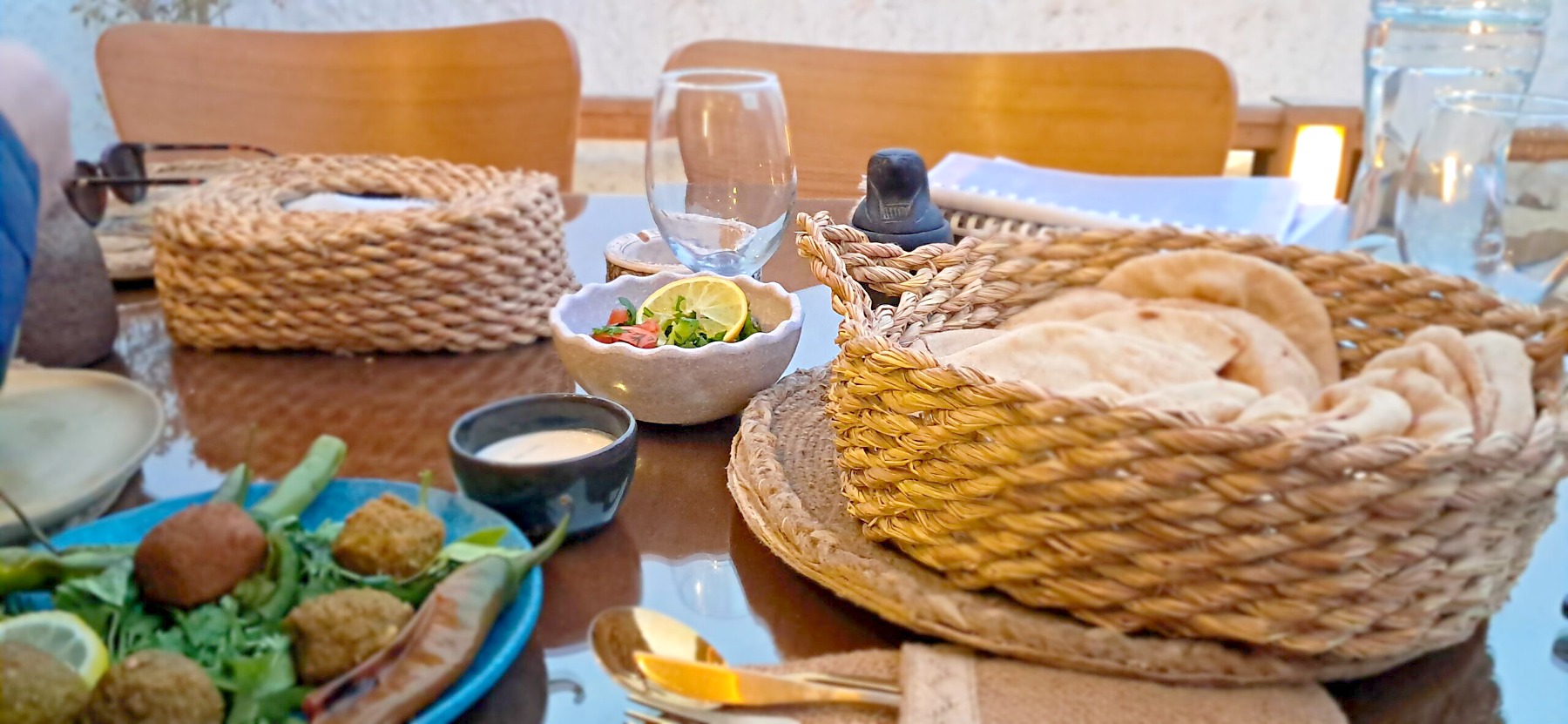
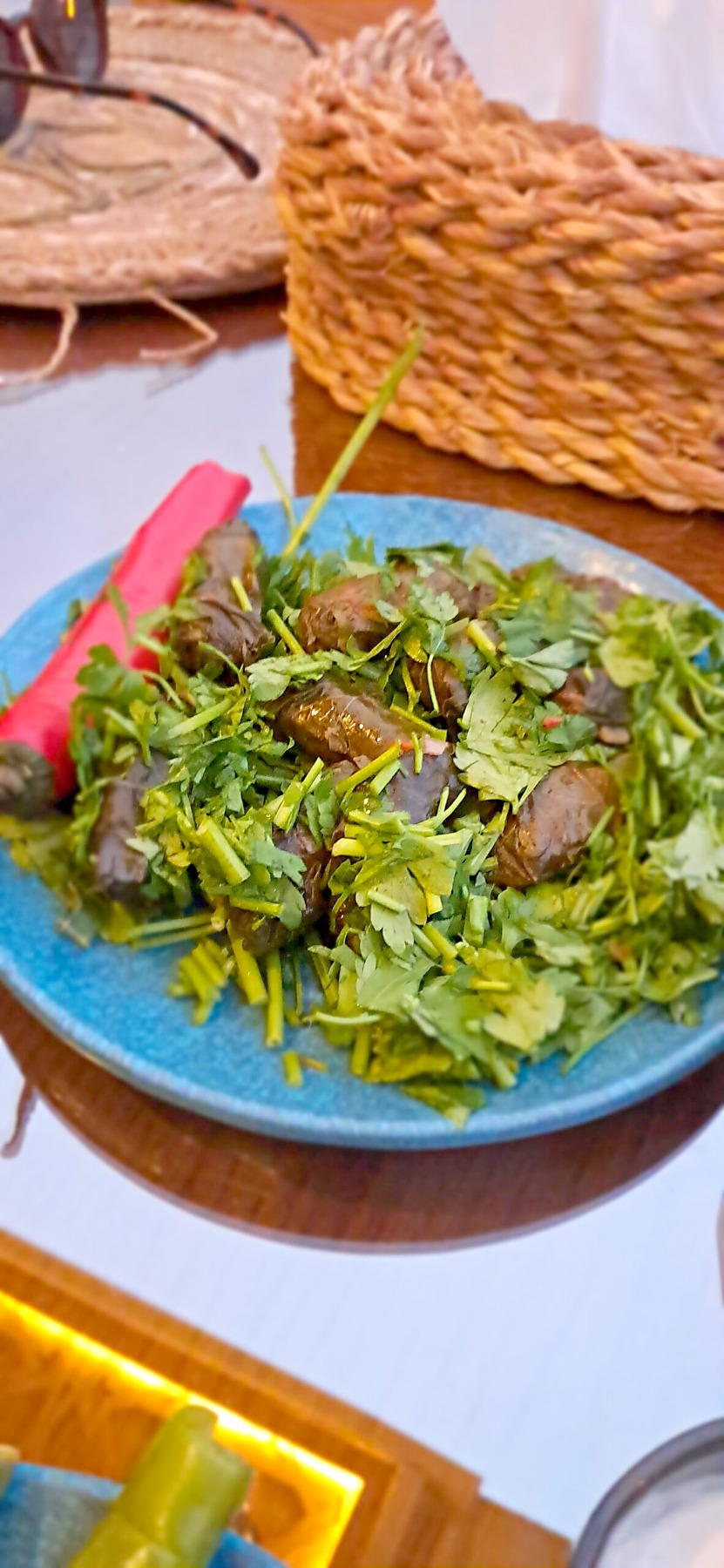
The shortfall isn’t in the existence of vegan food. It’s in the variety, the ease of access, and the fact that once you’ve had ful and falafel for breakfast, lunch, and dinner for several days running, you really start wanting something else.
What Eating on Tour Actually Looks Like
I let both operators know I was vegan before travelling, which I’d strongly recommend doing regardless of whether food is included. On the Nile cruise, all meals were included, so this was fairly critical. On the private Cairo tour, only breakfast was included, but I flagged it anyway because the guides were choosing where to stop, and I didn’t want to end up sitting in a seafood restaurant with nothing to eat.
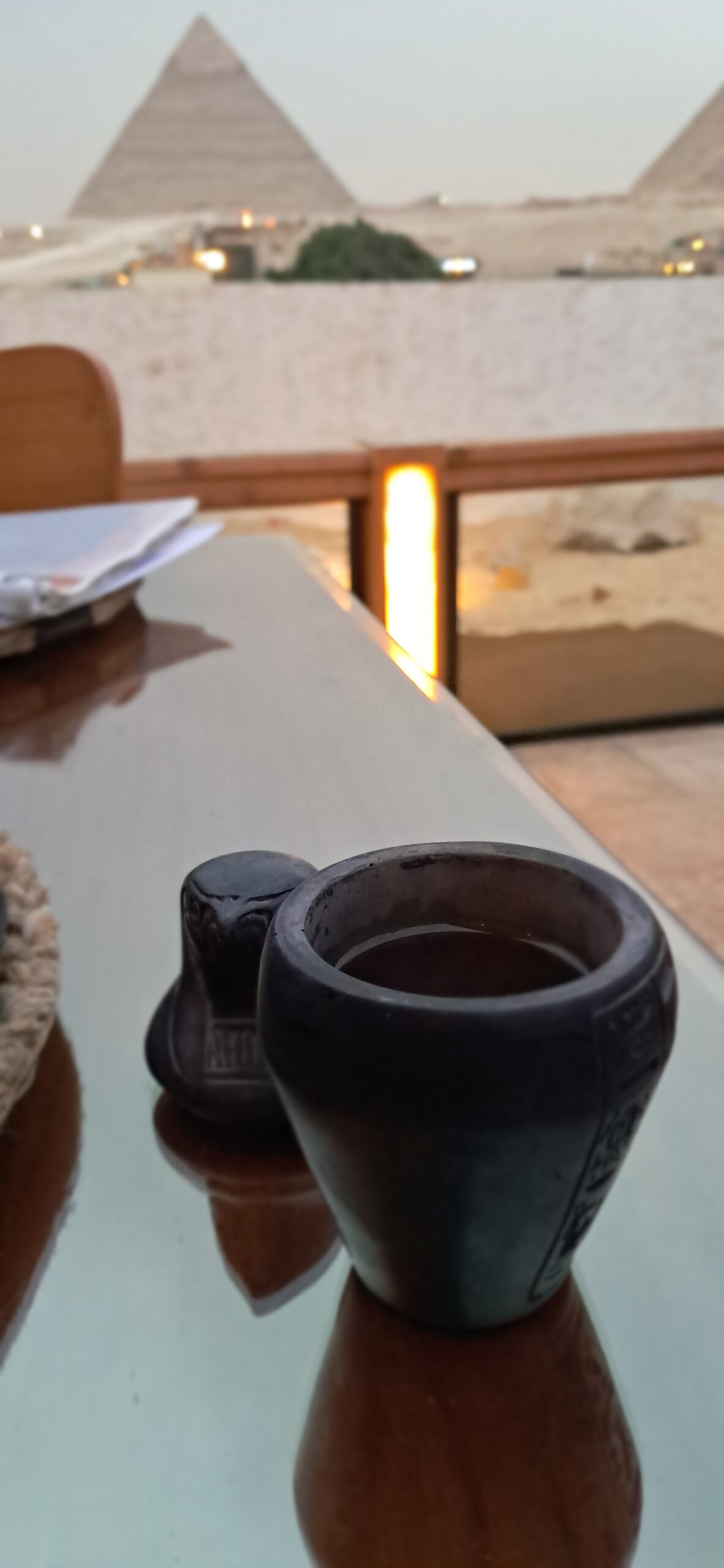
The Cairo private tour handled breakfast brilliantly. The hotel (Pyramids Top Inn, rough around the edges, three-star-at-best, but with a view of the pyramids from the breakfast terrace that genuinely made me laugh out loud when I opened the curtains) did fresh ful, falafel, Egyptian bread, salad, and fruit every morning. It’s the kind of breakfast that actually sets you up properly, and it was naturally vegan without anyone having to make any special arrangements.
Lunch was a different story. The guides on the Cairo tour weren’t sure where to take us for vegan food, and on day trips to places like Alexandria and Fayoum Oasis, there genuinely wasn’t much around. They tried. They bought snacks, which was kind. The snacks contained dairy. After the first day of handing them back with apologies, we stopped expecting lunch and just ate a big breakfast, grabbed whatever crisps or snacks we could find that didn’t have milk powder in them, and then ate dinner back near the hotel in the evenings.
This is probably the bit of the trip I’d do differently. If you have the option of booking accommodation with a kitchen, even just a small one, it makes a significant difference. You can make basic meals, keep your own food, and take the guesswork out of lunch. On this particular trip it wasn’t really possible given the itinerary, but it’s the approach I’d take if I were going back.
The tourist buffets that the guides sometimes took us to were actually better than I expected. They reliably had hummus, plain salads, rice, chickpeas, and similar enough to eat a reasonable meal, though they were expensive relative to what you were getting as a vegan. The guide on the Nile cruise, Mina, was genuinely excellent on this front. He understood what vegan meant, checked in with us at food stops, and on one occasion when the cruise ship served an a la carte meal and put a tomato and mozzarella plate in front of us, he went straight to the chef and had it replaced. Nobody asked him to do that. It was a small act but it made a real difference.
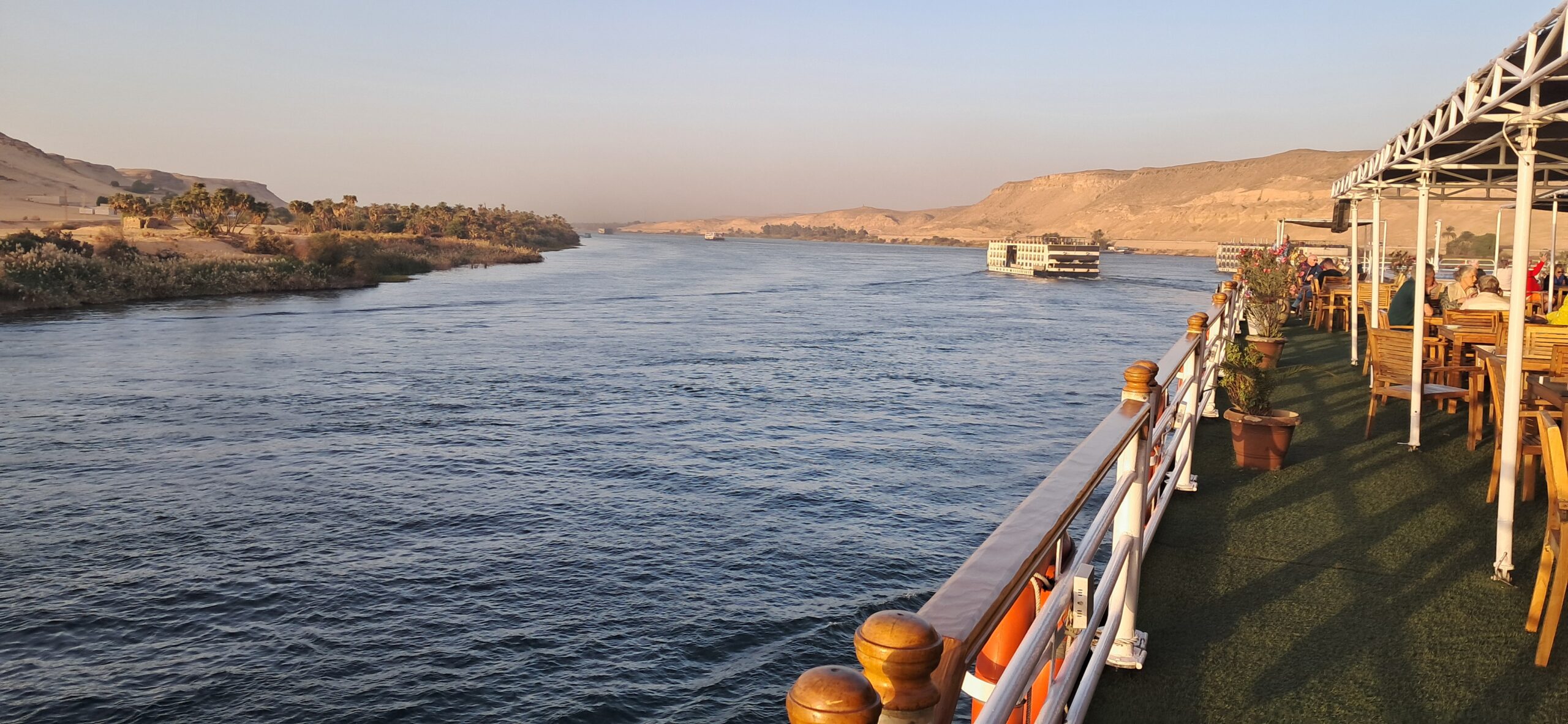
More on the Nile cruise food specifically in a separate post, because there’s a lot to say about navigating a buffet when nothing’s labelled and the chefs aren’t familiar with the concept of veganism.
Finding Food in Cairo Independently
This is where I need to give HappyCow a slightly complicated mention. I’ve used HappyCow for nearly fifteen years, and it’s got me through some genuinely tricky situations in remote places. But in Cairo, it let me down, and not because Cairo has no vegan options.
HappyCow doesn’t list restaurants that serve certain meats, including lamb, as part of their listing policy. In Egypt, where lamb is one of the most common proteins in the entire food culture, this means a huge proportion of Cairo’s restaurants are excluded from the results. What’s left is a very short list. And when I looked at reviews for the places that were listed as vegan-friendly, a number of reviewers noted that the food wasn’t actually vegan. Add Cairo’s notorious traffic to the equation, and you’ve got a tool that’s essentially unusable for navigating food there.
What actually worked was talking to the people at the hotel. The owners of Pyramids Top Inn also ran a restaurant called Pyramids Cave Lounge, just around the corner, that they hadn’t thought to mention. When I asked where we could find vegan food nearby, they said, basically, we own it. The restaurant knew what vegan meant, had falafel, ful, stuffed grape leaves, and koshari, and had one of the better views of the Sphinx and Pyramids I’d found. We went back three nights in a row purely because it was there, it was easy, and we knew what we could eat.
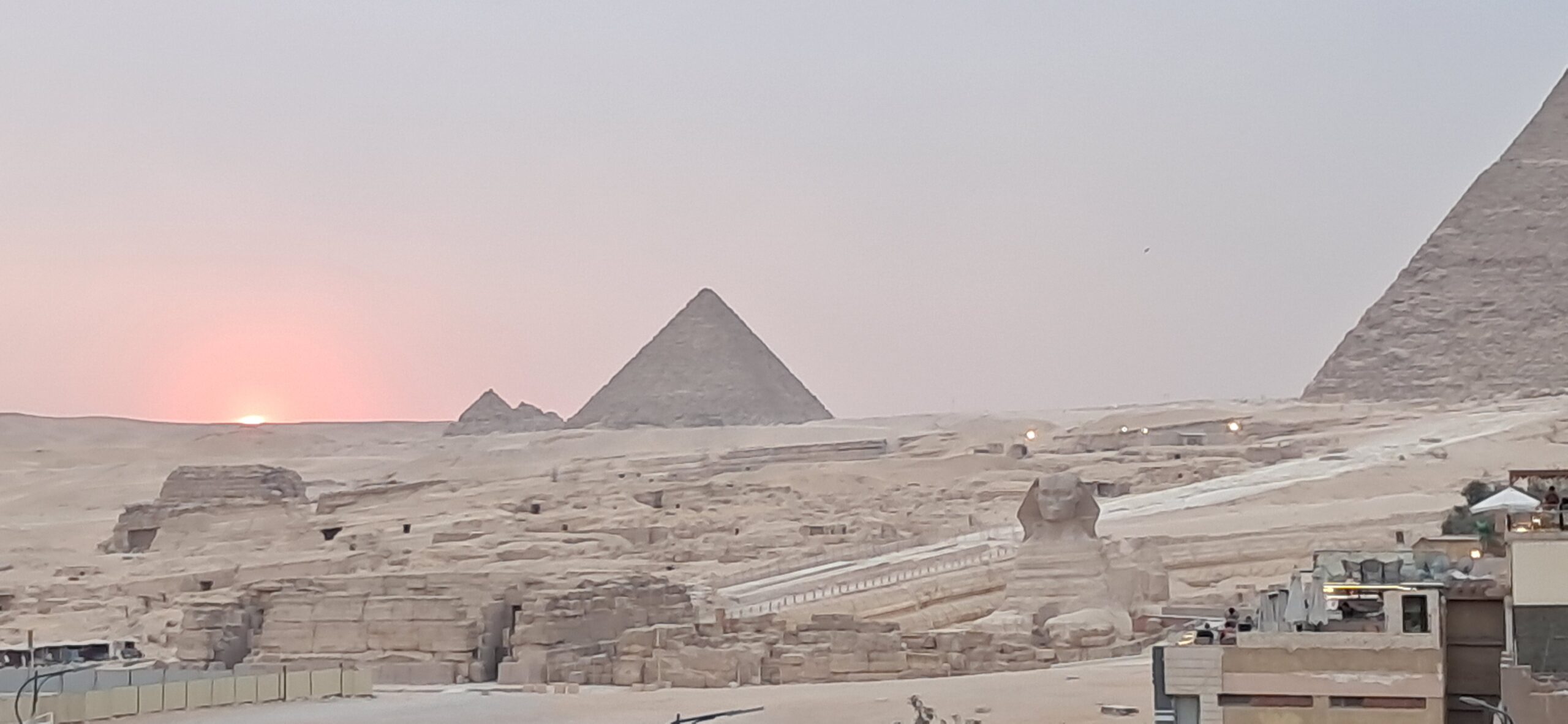
I’m still slightly gutted about Abou Tarek. It’s one of Cairo’s most famous koshari restaurants and it was absolutely on my list, but our driver flatly refused to take us there. If you’re going independently, make it a stop. From everything I’ve heard, it’s the koshari I should have had.
One tip that genuinely helps: Egypt has a strong Christian Coptic tradition, and during religious fasting periods, Egyptian Christians eat a completely vegan diet. If you say “Ana seyami” in Arabic (roughly: “I am fasting”), any Egyptian will immediately understand that you’re eating vegan, and the food will appear accordingly. It’s a small thing that cuts through the language barrier fast.
Dahab Is Different
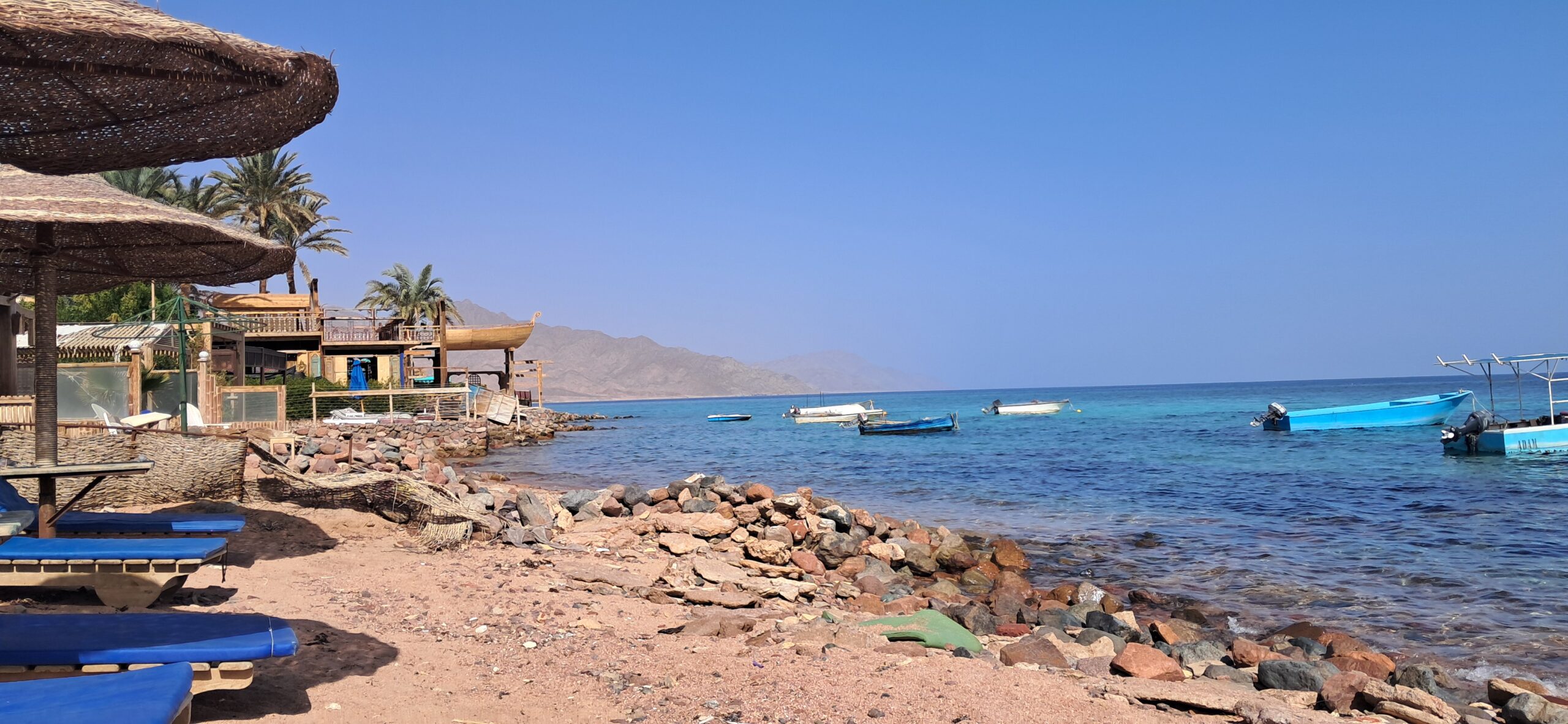
If you’re able to add time at the end of your Egypt trip, go to Dahab. It’s a small coastal town on the Red Sea, known for diving and snorkelling, and it has a completely different energy from the rest of Egypt, far more relaxed, easy to walk around, far less of the hassle you get in the main tourist areas.
It was also the only place in Egypt where I found anything resembling a vegan food scene. Multiple restaurants, visible vegan options, and the sense that this was a place where people had thought about it rather than accidentally stumbled into it. More on Dahab in a separate post.
The Bottom Line
Two out of five. And I’d go again.
Egypt is one of the most genuinely astonishing places I’ve ever been, and I’ve been to quite a few. The scale of what you see there, the depth of the history, the quality of the guides if you choose the right tour, none of that is diminished by the food situation. You won’t go hungry. Ful is delicious, falafel is everywhere, koshari will keep you going. But variety is limited, easy access is limited, and if you’re used to being able to wander into most restaurants with confidence, Egypt requires a different approach.
Tell your tour operator you’re vegan before you travel. Book accommodation with a kitchen if you can. Keep your expectations realistic about what eating on a Nile cruise will look like. And if variety and a vegan scene matter to you, build Dahab into the itinerary.
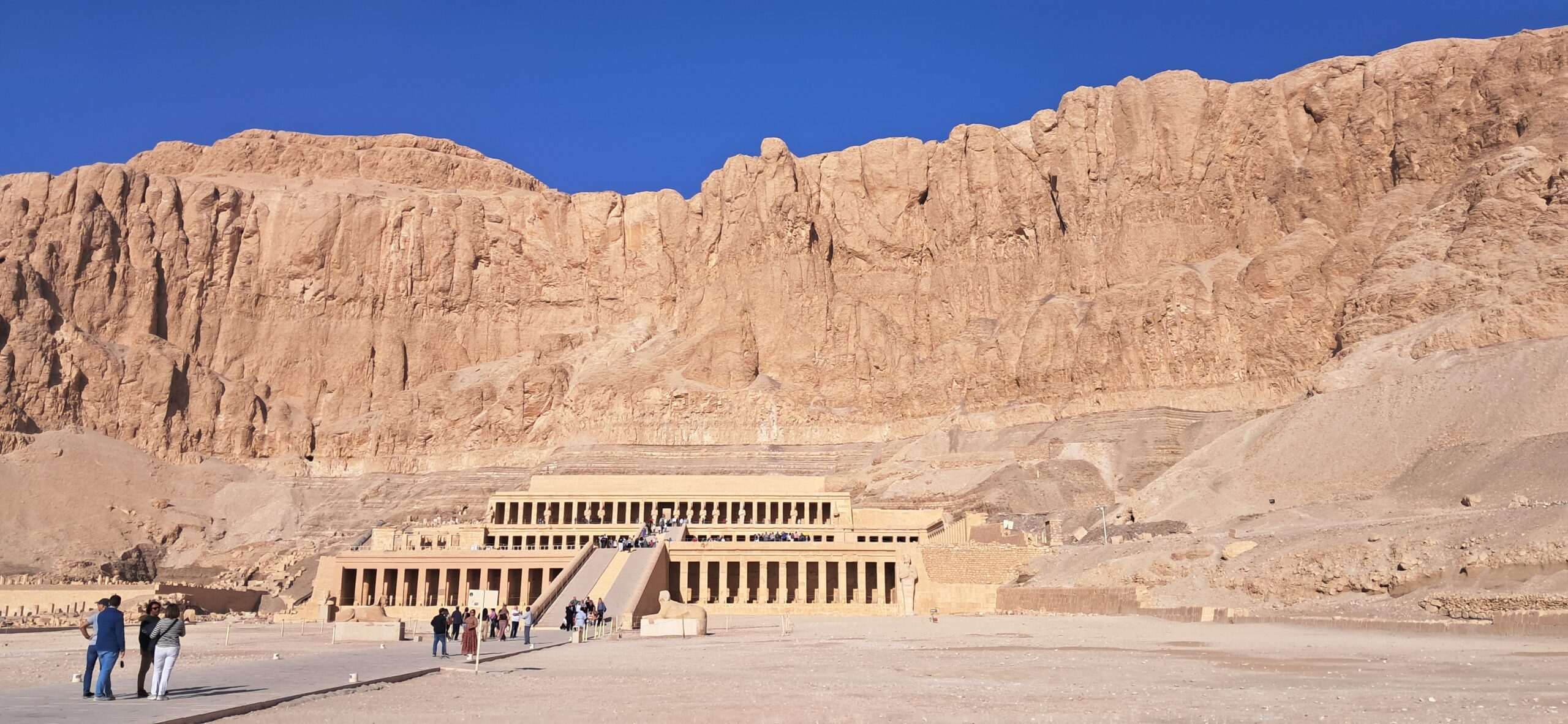
The temples are worth it. The guide who stops the waiter before the mozzarella lands on your plate is worth it. It just takes a bit more planning.
Planning a Nile cruise? Read my full breakdown of eating vegan on board: Can You Take a Nile Cruise as a Vegan? (coming soon)
Not sure what’s actually in Egyptian food? What Vegans Can Actually Eat in Egypt: Dish by Dish
Planning the whole trip? My guide to ethical travel in Egypt pulls it all together.
