
“How do you travel as a vegan? Isn’t it hard?”
I get asked this constantly. And if you want the brutally honest answer: it can be. Some trips it’s effortless. Some trips you spend an hour walking unfamiliar streets getting hungrier and crankier while the person you’re travelling with quietly loses the will to live.
But hard is not the same as impossible. Learning how to travel as a vegan is really just learning how to plan, and once you’ve got that down, finding the food stops being the stressful part and turns into one of the best parts. (Genuinely. Some of my favourite travel memories are tiny vegan places in cities where I was braced to find nothing.)
For context: I’ve been vegetarian since I was a kid in the 90s, back when a “vegetarian option” was a plate of chips and a suspicious look, and vegan for over fourteen years. I’ve done this across a lot of countries, well and badly. This is how I actually plan a trip around it.
Different trips need different plans
Not every trip needs the same amount of thought. A long weekend in a European city is one thing. Backpacking South America for six months is another. Going to see wildlife in rural Indonesia is another again.
If you’re doing long, loose, extended travel, the vegan side probably won’t be the thing you optimise everything around, and that’s fine. You adapt, you carry more snacks, you cook when you can. For a shorter trip, though, a bit of planning up front saves you a lot of hangry wandering later.
So take what’s useful here and leave the rest. This is a toolkit, not a rulebook.
How to Travel as a Vegan Without Winging the Food
The single habit that changes everything: before I book anything, I find out what the vegan scene actually looks like where I’m going.
I start with HappyCow. If you’re vegan you already know it, but just in case: it’s a map of vegan, vegetarian and veg-friendly places worldwide, and it’s been my travel companion for years. I look at the fully vegan places first (how many are there, and where), then the vegetarian ones, which often quietly do the most vegan food of all.
Here’s the bit most guides skip. Vegan food doesn’t spread evenly across a city. It clusters. There’s almost always one neighbourhood where the plant-based places pile up, and everywhere else is a bit of a desert. Athens has Exarchia. Berlin has Friedrichshain, Kreuzberg and Neukölln. Lisbon has Príncipe Real and Chiado. Barcelona has Sant Antoni and Poblenou. In Nice I had several vegan spots within a ten minute walk, all in the same pocket of the city.
So I don’t just check whether a city has vegan food. I check where it is, and then I choose where I stay with that in mind. I’m not saying book the room directly above a vegan cafe. I’m saying if you can reliably walk to good food from your bed, you’ve deleted the single most stressful part of the trip. No taxis to dinner, no wandering, no meltdown at 9pm.
One honest caveat about HappyCow, because I love it but it isn’t magic. It only lists places that are vegan, vegetarian, or hit its bar for veg-friendly (a spot has to offer a few genuine vegan dishes to make the cut). I completely agree with the ethics of that. But it means a normal local restaurant that serves meat and could happily make you something vegan often won’t show up at all. So sometimes a destination looks like a vegan wasteland on the app when it really isn’t. You just have to dig the options out yourself, and be willing to eat somewhere that also serves meat. I’d rather not, but sometimes it’s that or nothing.
A Kitchen, or Not? (and the Great Hotel Breakfast Con)
Once I know the scene, the next question is where I sleep, and specifically whether I want a kitchen.
If I’m going somewhere with a thin vegan scene, I lean hard towards a place with a kitchen, even a tiny one. You don’t always want to eat out, eating out three times a day gets expensive fast, and being able to make your own breakfast or a quick lunch takes the pressure off completely. In some places, though, hotels are just the norm and self-catering barely exists, so I factor that in rather than fighting it.
If it is a hotel, here’s my rule: don’t pay extra for breakfast. A dedicated vegan hotel would be a dream, but let’s be real, those are almost always out of my price range (I’ve never actually stayed in one). At a normal hotel, “breakfast included” as a vegan usually means fruit and black coffee while everyone else has the works. That’s fine, but it’s not worth paying for. Read the reviews, look at photos of the buffet, and if it’s clearly just fruit and coffee, skip it and go find something better down the road.
Getting There Without Going Hungry
Flights first. On anything long haul with meals included, go into the booking and select the vegan meal (the airline code is VGML). Always do this. It costs nothing and it’s the difference between a hot meal and a bread roll.
Emphasis on usually, though. I once selected a vegan meal on a British Airways flight between Australia and the UK and simply wasn’t given one. “Some kind of error.” Their fix was to bring me a salad with a little tub of soy milk on the side, and to tell me, with a straight face, that the soy milk was the dressing. I had to laugh. A very kind flight attendant eventually gave me some fruit she’d bought for herself, which was the only reason I ate at all. So yes, select the meal. No, don’t stake your whole day on it turning up.
The same logic applies to overnight buses and trains, where nobody is feeding you anything you can eat. Plan for it, bring your own, and treat any food you’re offered as a bonus. (If you’re weighing up a sleeper train, I wrote about doing the Egypt sleeper train as a vegan.)
Pack Like You Might Not Find Anything
I travel with snacks. Always. How many depends on where I’m going, but I’d rather give up space in my bag than arrive somewhere and find there’s genuinely nothing.
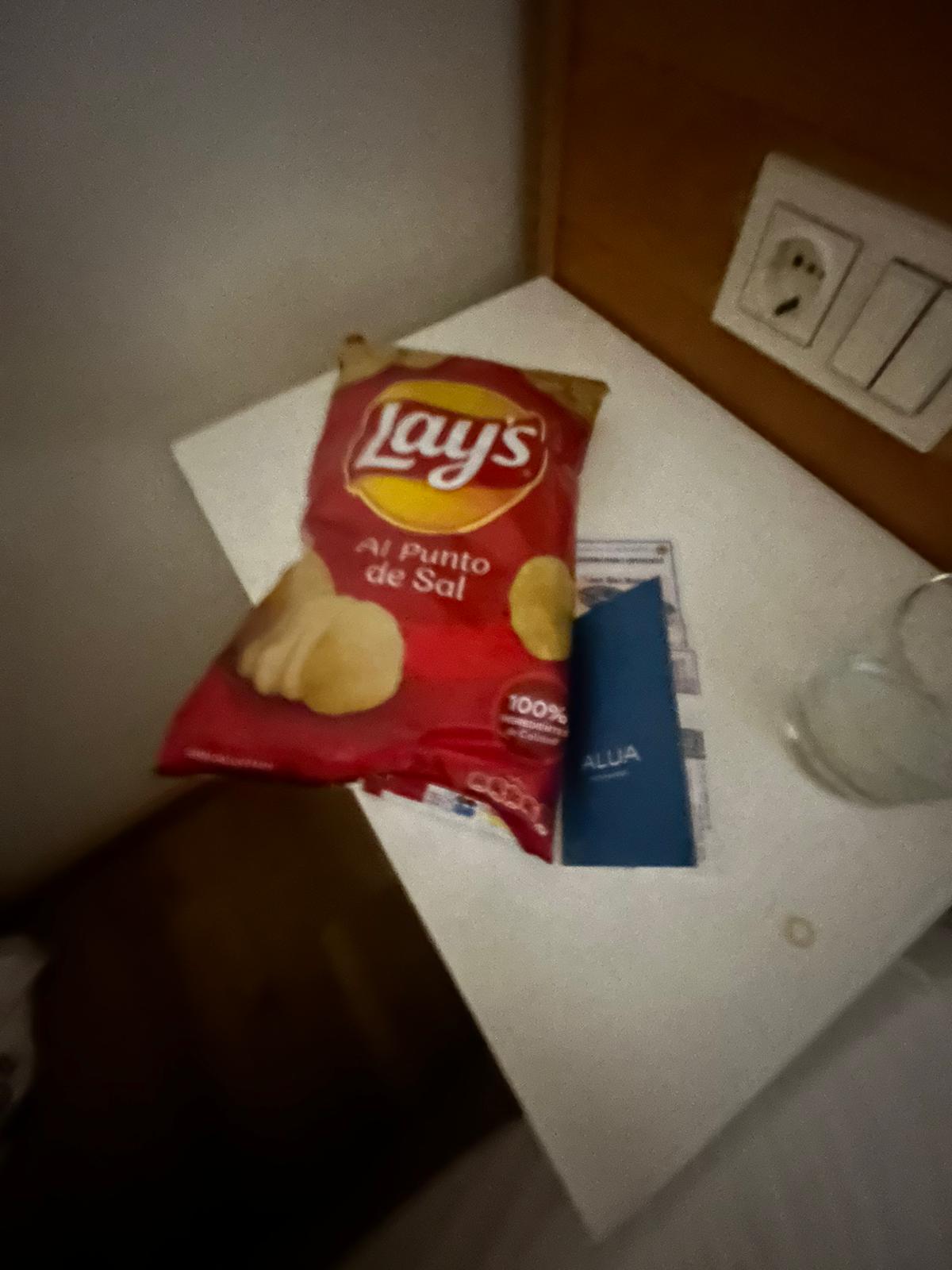
My standard stash: a big bag of nuts, pouches of ready-cooked lentils and beans, some dried fruit, a few protein bars. It’s not glamorous, but it means I’ve always got protein, fibre and iron on me, which matters more than you’d think when you’re out all day and the only “vegan” option is a bag of crisps (chips, if you’re American) and a packet of Oreos. I have eaten that exact sad combination more times than I can count across my travels, and I can honestly never eat another Oreo again.
Two examples of why this matters. In Greece, Athens is full of brilliant vegan restaurants, no problem at all. But out in Meteora you’re not finding vegan breakfast, lunch and dinner every single day. You pick and choose from what’s there, and you can’t assume the supermarket will stock what you need. In Egypt, where veganism is barely on the radar, I travelled with a full snack arsenal and was very glad I did.
My other trick, if I’m not staying somewhere with a kitchen: I pack a small pocket knife (in my checked bag, obviously, never carry-on). It sounds daft, but it opens everything up. When I arrive I head to the local fruit and veg market or a corner shop and grab avocados, some bread or crackers, fruit. With a knife you can actually turn that into a meal instead of gnawing a whole avocado like an animal. I’ve even travelled with a tiny thing of salt and pepper. It’s cheap, it’s fresh, and it means you’re not living entirely out of snack packets.
When You Arrive, Do the Boring Admin
This one’s dull and it saves so many evenings: check the opening hours.
If you’ve booked somewhere because there are a couple of decent places within walking distance, actually look at when they’re open before you rely on them. Nothing worse than trekking to the one good spot you’d earmarked for dinner and finding it shuts on Mondays, and now you’re back to wandering the streets hungry, which is exactly the situation you planned to avoid.
Then do a quick market or shop run early on, so you’ve got a fallback in the room for the mornings and the days that go sideways.
Health Food Shops and Vegan Markets Are Quiet Goldmines
While you’re at it, hunt down the local health food shops. They very often carry vegan products, and you genuinely never know what you’ll turn up. I’ve found incredible vegan cheese tucked away in one when I’d resigned myself to going without. It’s the sort of thing that makes a self-catering trip suddenly feel luxurious.
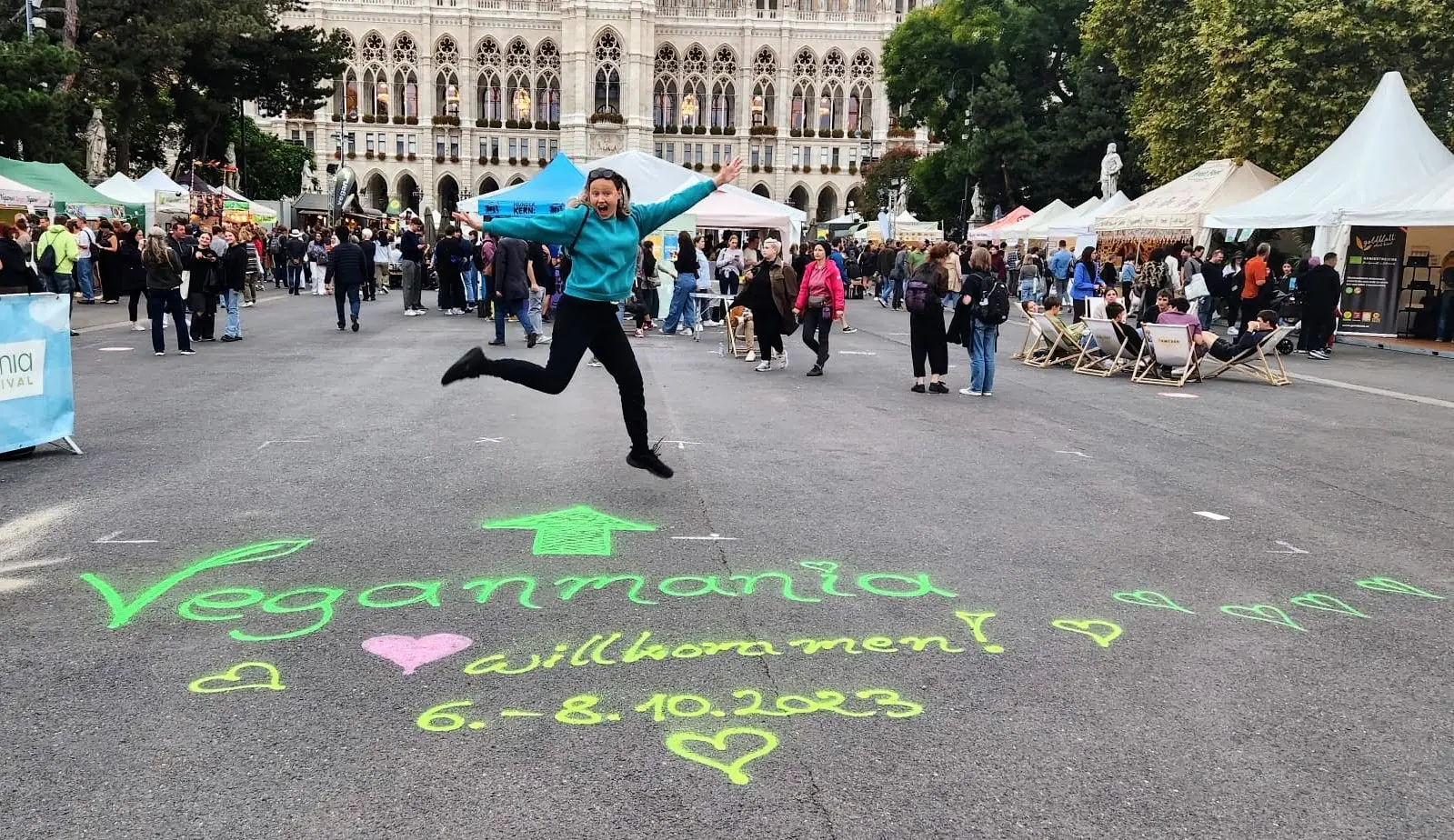
Vegan markets are the same, only better. In Vienna I stumbled completely by accident into Vegan Mania, a whole market of plant-based stalls I had no idea was on. (Photographic evidence of my excitement below.) Worth every bit of the detour.
The catch is that health food shops and pop-up vegan markets don’t always show up on HappyCow, so search Google Maps for them too, and check whether any markets are running while you’re in town. When they exist, they’re the best place to stock up.
Eating Where Veganism Isn’t Really a Thing
This is where it gets interesting, and where you have to manage your expectations honestly.
If you go somewhere veganism isn’t a known concept, don’t expect people to understand what you want, or to have heard the word at all. Sometimes you’ll have to accept you won’t get a proper meal until dinner, because that’s just what’s available. That’s part of the deal, and getting quietly furious about it helps nobody.
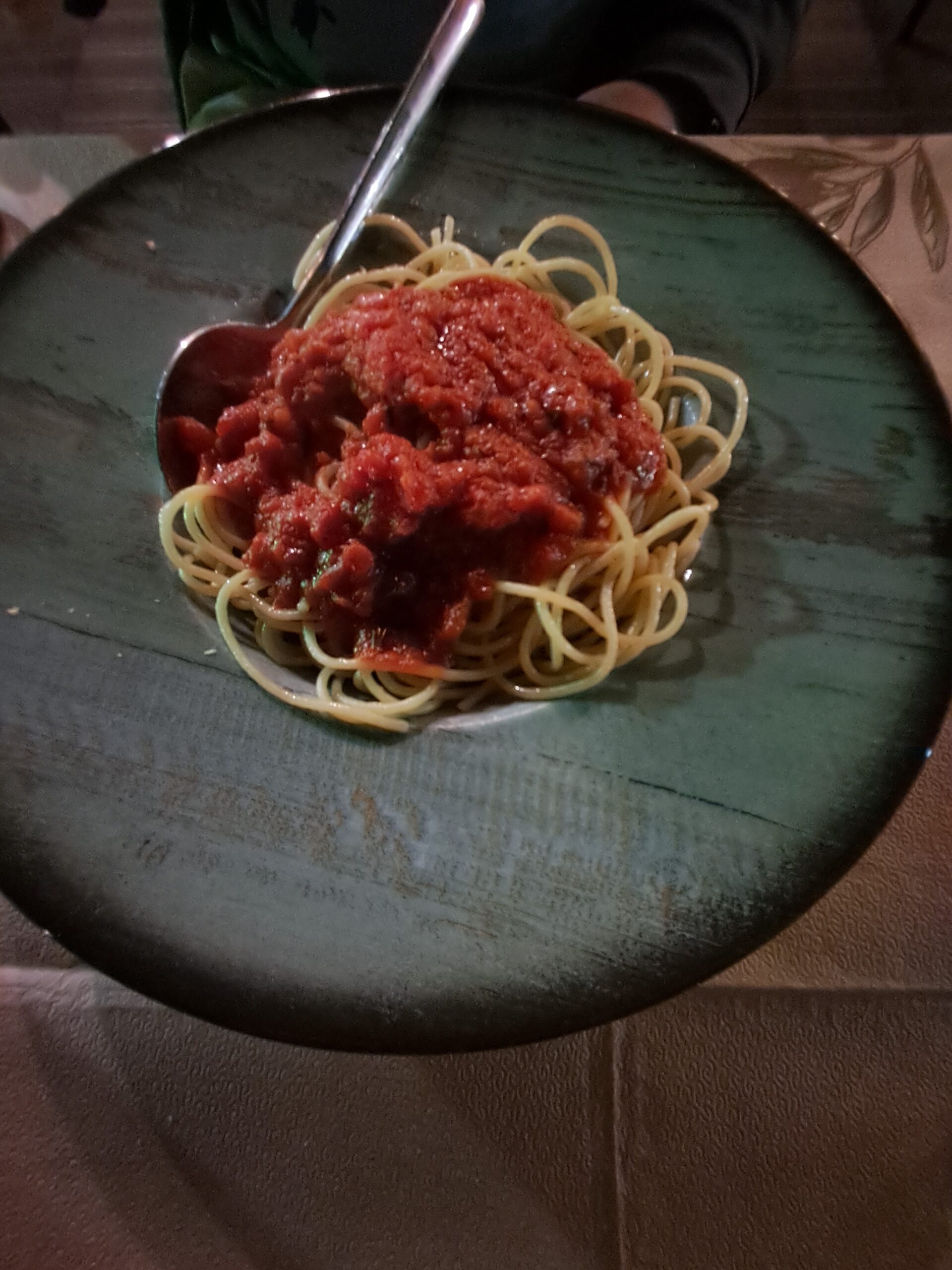
But here’s the thing: when you can actually explain what you need, most people genuinely want to help. Hospitality is a real instinct almost everywhere. Something as basic as pasta with tomato sauce is vegan in most of the world. If you can communicate, or you’re travelling with someone who speaks the language, people will usually try to sort you out.
So learn a few words where you can. When I spent six months in South America I picked up conversational Spanish, and crucially the words for vegan, meat, fish, cheese, honey, milk, “I’d like this,” and “without this.” In Egypt I didn’t manage the Arabic, and in Greece I tried and found it genuinely hard. When you can’t learn the language, lean on translation apps. Some people travel with printed cards explaining they’re vegan and what they can’t eat, which I’ve never personally done, but I can see the sense in it.
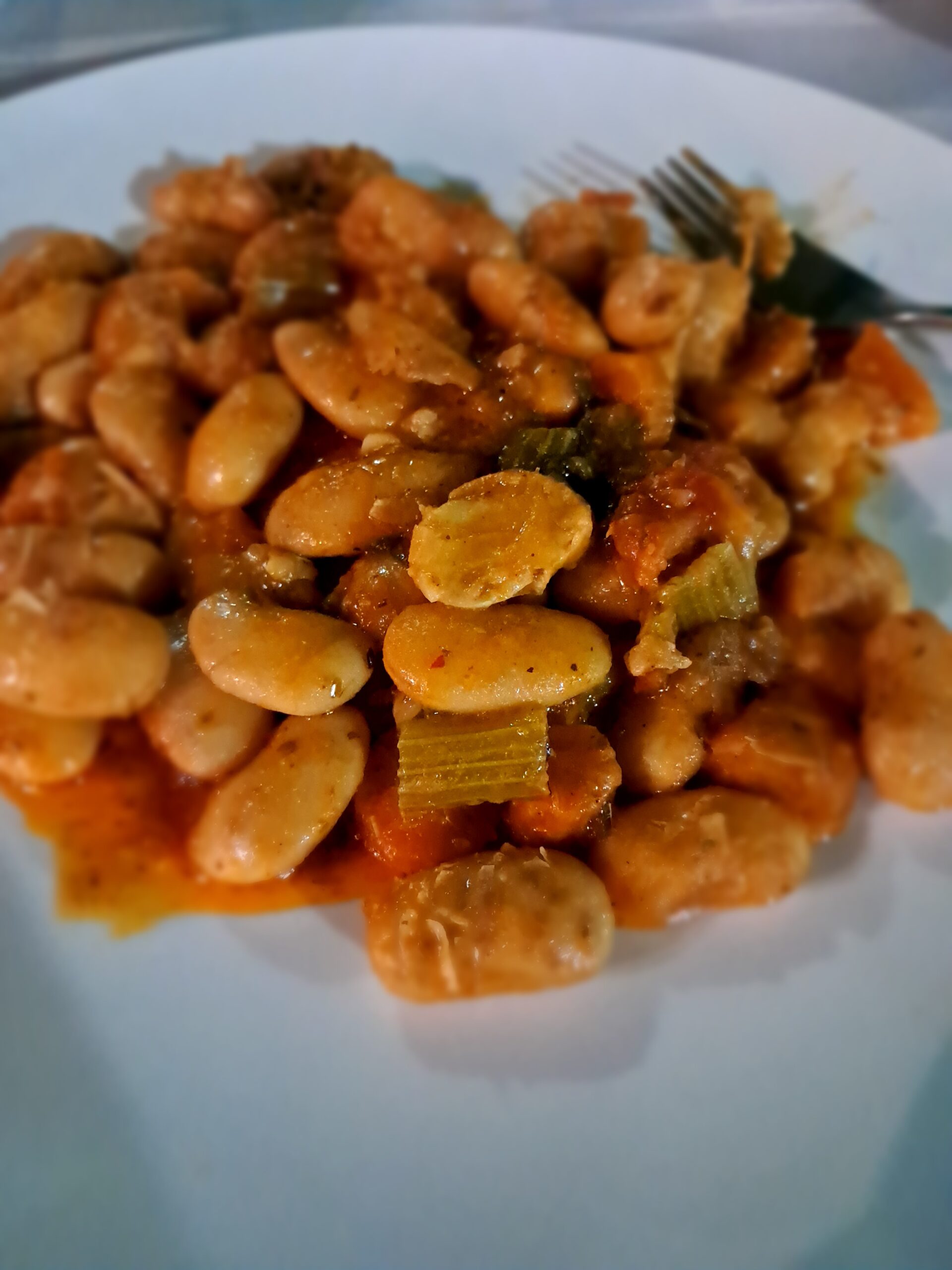
The other half of this is knowing what’s accidentally vegan. In a lot of countries where veganism isn’t a thing, there are still traditional dishes that just happen to be plant-based, often because of local religious or cultural food traditions. Greece has gigantes (giant beans baked in tomato sauce). Egypt has ful (stewed fava beans) and koshari (that glorious carb pile of pasta, rice, lentils and fried onion). France gave me socca in Nice, a chickpea flour pancake that’s vegan by default and completely local. Elsewhere you’ve got things like Indian dal and dosa, Middle Eastern hummus and falafel, and so on. Research what’s likely vegan before you go, so you’re not starting from zero.
A word of realism, though. In these places you often can’t verify every ingredient, and you’ll want to keep half an eye on things like meat stock, what something’s fried in, and hidden animal fats. I know vegans who won’t eat anything that isn’t explicitly labelled vegan, and honestly, in a lot of non-Westernised countries that’s close to impossible. At some point you have to ask the questions, then place a bit of trust in the answers and in what’s actually available. That’s a personal line, and only you can decide where yours sits.
Organised Tours and Day Trips
If you book a day trip (a full day snorkelling, say) that includes lunch, it’s unlikely they’ll have a vegan option ready. I’d genuinely rather tell them in advance not to give me anything, so no food gets wasted and I’m not handed something I can’t eat, and just bring my own. An avocado and tomato sandwich made at the hotel does the job. The key word is communication: either check well ahead whether they can do vegan (remembering they may not know the concept), or take yourself out of the equation and pack your own.
Multi-day organised tours are a different beast, and I have opinions here because I work on the complaints team for a travel company. If a tour matters to you, only book one that actually says it caters for vegans. But even then, understand what “caters for vegans” means to an operator: their whole job is to give you something with no meat, no dairy and no eggs. That’s it. They are not thinking about whether you’re getting enough protein, iron or variety across the week.
I’ve genuinely handled complaints from vegans who felt short-changed on protein and variety on tours, and I do get it, because feeling good and well-fed when you travel matters. But that part is on you. Manage your own expectations, and top up with your own snacks rather than assuming the tour will look after your nutrition. Nobody’s coming to save your macros.
The Best Part, Honestly
For all the planning talk, here’s what I actually love: finding the vegan scene in a place you didn’t expect one.
In El Calafate, deep in Patagonia, somewhere I’d assumed would be all steak and more steak, I found a little place making its own vegan hummus and its own wraps. It felt like a small miracle. That’s the feeling I chase now. Walking into a tiny vegan spot in a city where they’re rare, talking to the owner, realising there are people out here doing this thing you care about and building something for locals and travellers alike.
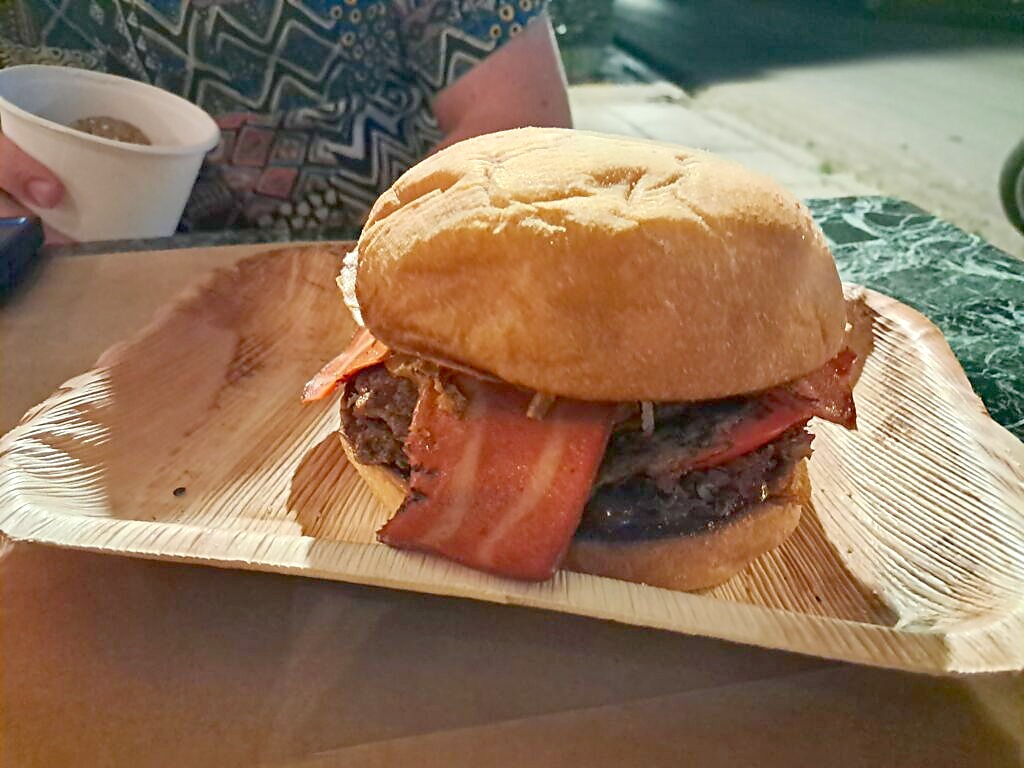
My favourite move is to seek out vegan places that do the local food, not just another burger or plate of falafel (as good as those are). The whole assumption is that being vegan means missing out on a country’s real cooking. It doesn’t. You just find the vegan version. In Vienna I had a properly local vegan soup, dumpling and all, the kind of homely dish you’d assume was never going to be vegan. Those are the meals I remember, not the burgers.
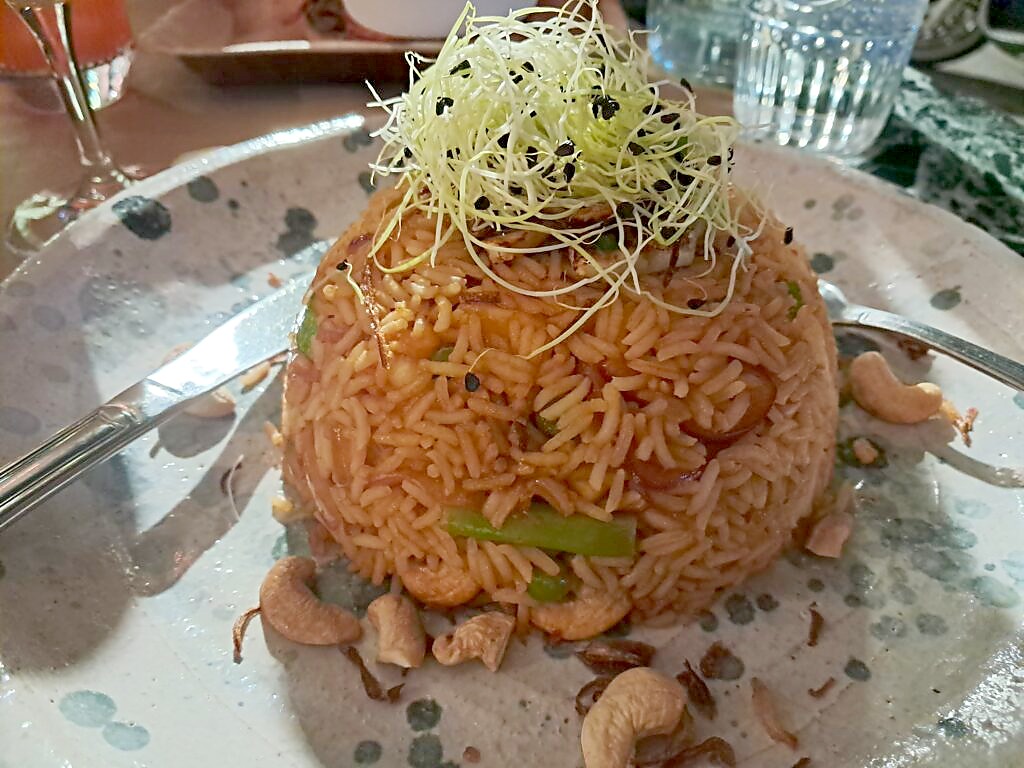
And where you can, back the independents. I’d much rather give my money to a little spot that’s genuinely tried and believes in what it’s doing than to a chain that happens to bolt a vegan option onto the menu. Be a bit of an ambassador for the good ones. Leave the review. Tell people.
(Small side note: it’s also worth a glance at the calendar. In some places, local fasting or festival seasons mean far more vegan food than usual is suddenly everywhere, Greek Orthodox Lent being the classic example. Not something to plan a whole trip around, but handy to know.)
It’s Not Just the Food
Travelling as a vegan doesn’t stop at your plate, so a few things beyond the food that I think about.
Toiletries. If you travel light like me, this is an easy one to forget. It’s hard to know whether a hotel in some countries stocks vegan toiletries, whereas in an apartment or Airbnb you’ve got more control. So I bring my own in small reusable bottles (which last a surprisingly long time), or just a bar of vegan soap, and I don’t have to think about it.
Sunscreen. If you’re going to be swimming in the ocean, you want reef-safe sunscreen, and you often can’t buy it in less touristed or non-Westernised places. Bring your own. This, along with liquids generally, is one of those things that can tip you into needing checked luggage, so factor it in when you book.
And the activities. This one’s subjective and people land in different places, so I’ll just tell you where I stand. Personally I’d never visit a zoo or an aquarium, or most “sanctuaries” for that matter. (I dig into what ethical wildlife tourism actually looks like in my guide to ethical orangutan trekking in Bukit Lawang, and a full how-to-spot-a-real-sanctuary post is coming.) Beyond the obvious ones, watch out for animal experiences quietly baked into package trips. Camel rides get included as standard on all sorts of trips, from the Sahara to the pyramids. It’s not something I’d do now, though I’ll be honest, I’ve done it in the past, before I had the awareness I have today (I wrote about exactly that in camel rides at the pyramids). The point isn’t to be perfect. It’s to check what’s actually included before you book, ask what the alternatives are, and speak up. There are almost always other options if you look.
FAQ
Is it hard to travel as a vegan?
It can be, but it doesn’t have to be. In big Western cities it’s easy. Somewhere veganism isn’t known, it takes real planning and a flexible attitude. The effort is front-loaded: do the research before you book and the trip itself is mostly smooth.
How do you find vegan food abroad?
Start with HappyCow, cross-check with a “vegan” search in Google Maps (which catches places HappyCow’s rules miss), and learn which local dishes are accidentally vegan. Markets are your friend everywhere.
Do you need a kitchen when travelling vegan?
Not always, but it’s a big help anywhere with a thin vegan scene, and it saves money. Where hotels are the norm, plan around snacks and eating out instead.
What vegan snacks travel well?
Nuts, pouches of ready-cooked lentils and beans, dried fruit and protein bars. Compact, non-perishable, and actually nutritious rather than just carbs.
How do you eat vegan where it’s not common?
Manage expectations, learn a few key words or use a translation app, lean on accidentally-vegan local dishes, and accept you’ll sometimes have to ask questions and trust the answers.
The Honest Final Word
Can travelling as a vegan be hard? Sometimes, yes. Does it take effort? Absolutely, but so does being vegan at home, and if it didn’t, a lot more people would do it. The trade is worth it. You’ll eat things you’ll remember for years, you’ll stumble into vegan communities in the least likely places, and you’ll prove, mostly to yourself, that “I could never do that when I travel” was never actually true.
Plan the food like you plan the flights, and the rest takes care of itself.
What I Actually Pack (and What’s on My Phone)
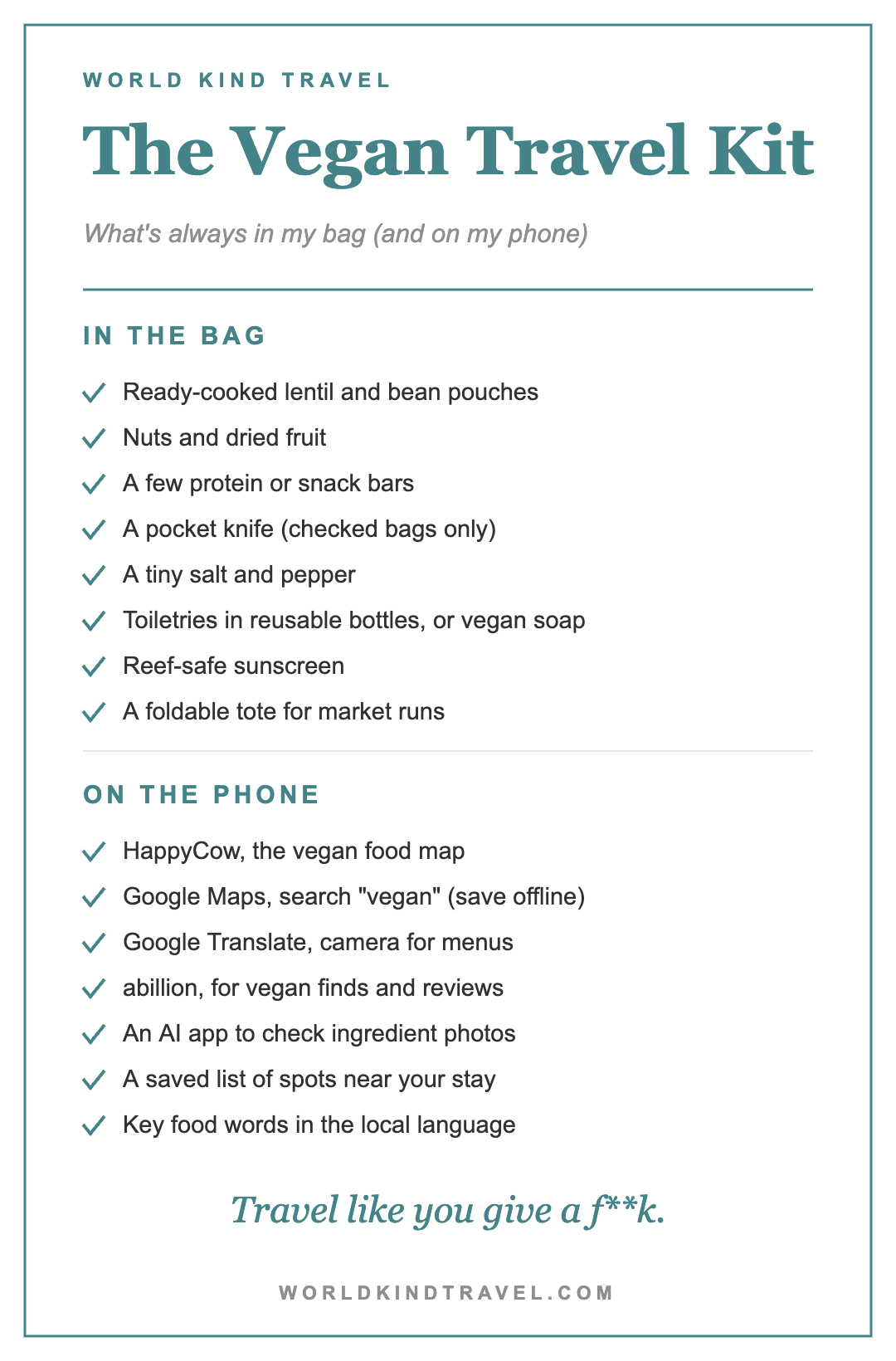
- Pouches of ready-cooked lentils and beans
- Nuts and dried fruit
- A few protein or snack bars
- A pocket knife (checked luggage only)
- A tiny salt and pepper
- Toiletries in reusable bottles, or a bar of vegan soap
- Reef-safe sunscreen
- A foldable tote for market runs
- On the phone: HappyCow, Google Maps (search “vegan”, saved offline), Google Translate’s camera, abillion, and an AI app to check ingredient photos
Related reading: Vegan in Greece · What Can Vegans Eat in Egypt? · The Egypt Sleeper Train. A full guide to spotting genuine ethical animal sanctuaries is coming soon.
