I have not set foot in a zoo in longer than I can remember.
I lived in Australia for fifteen years and could have seen a Komodo dragon any weekend I fancied it. There are several in Australian zoos. I never went. Watching an animal pace around an enclosure brings me no joy whatsoever, and I am not handing over money for the privilege of feeling sad.
Which leaves exactly one option for seeing most of the animals I want to see: go to where they live.
Komodo dragons had been on my list for years. So when I was planning Indonesia, that part was non-negotiable. I was going to Flores.
Where you actually go, and how
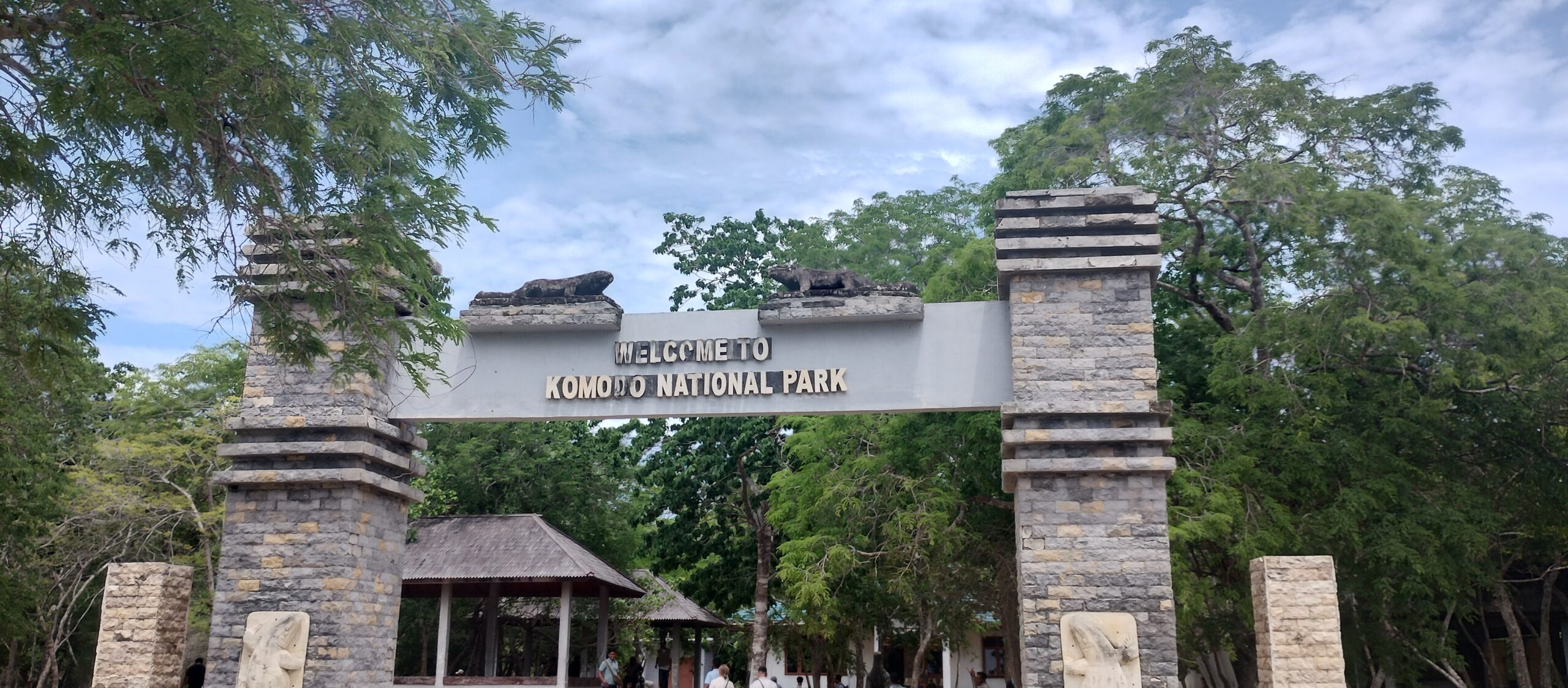
The dragons live in Komodo National Park, a UNESCO World Heritage site spread across a handful of islands in eastern Indonesia. Roughly 3,000 dragons live in the park, with something like 1,700 of them on Komodo Island itself.
You get there via Labuan Bajo, a town on the western tip of Flores. I flew in from Bali, which takes about an hour and a half. From Labuan Bajo you take a boat out into the park.
There are three broad ways to do it:
- Day trip by speedboat. What I did. Out early, back by evening.
- Liveaboard or sailing trip. Two to four days, sleeping on the boat, far more snorkelling and diving.
- Staying inside the park itself, where there are a few basic lodges.
If money and time were no object I would have done the liveaboard, because the snorkelling in this part of the world is meant to be exceptional and a day trip barely scratches it. But I was also heading to Sumatra to trek with orangutans in Gunung Leuser, and you cannot do everything. Pick and choose. That is just travel.
(If you are weighing up Sumatra too, here is what ethical orangutan trekking in Bukit Lawang actually involves.)
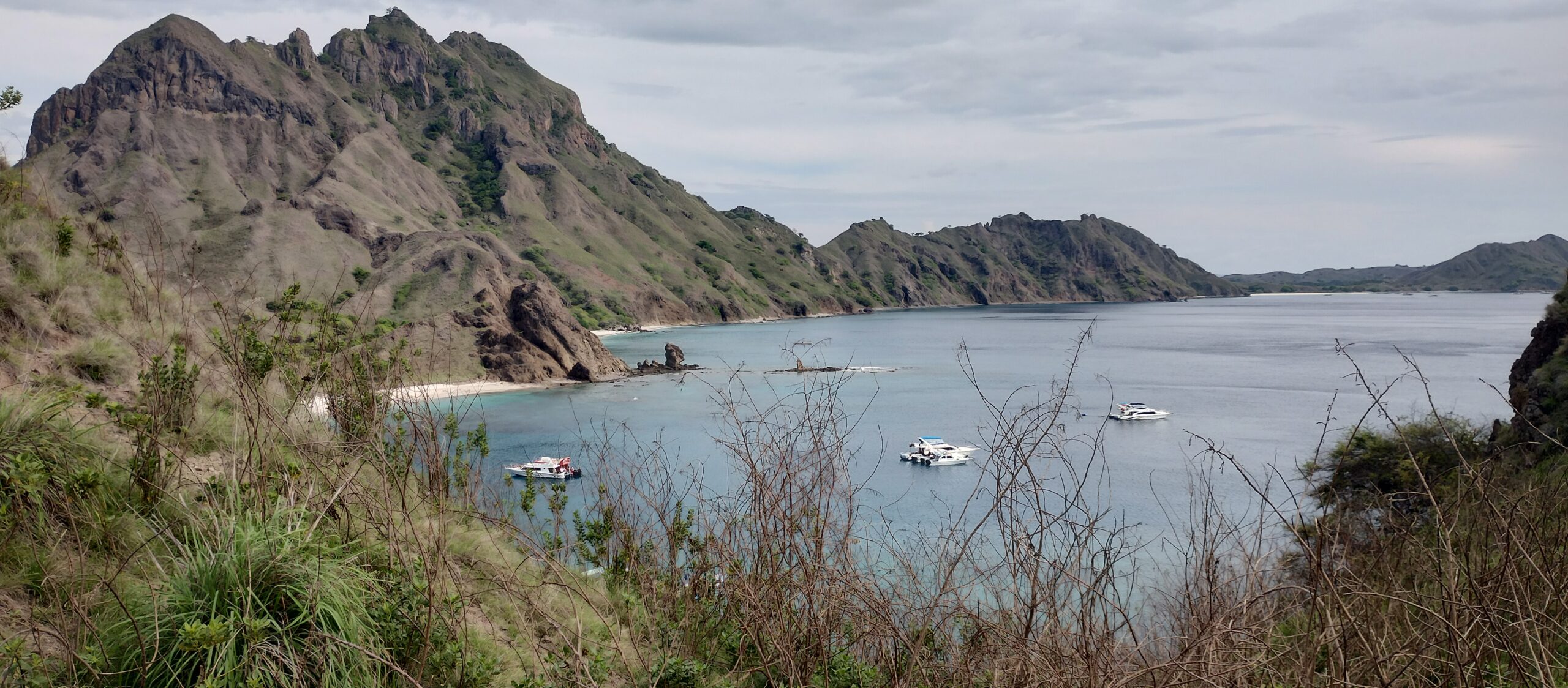
Our day covered Padar Island first for the classic viewpoint hike, then Komodo Island for the dragons, then Taka Makassar (a sandbar in the middle of the ocean that is exactly as ridiculous as it sounds), Pink Beach, Kanawa Island, and Manta Point on the way home.
The dragons
First thing I learned: Komodo dragons like the beach.
We pulled up to the jetty and there were already baby dragons running along the sand. Genuinely adorable, in a way I was not prepared for. They move like the daft little lizards you would see darting across a wall anywhere hot, except they grow into something considerably less daft.
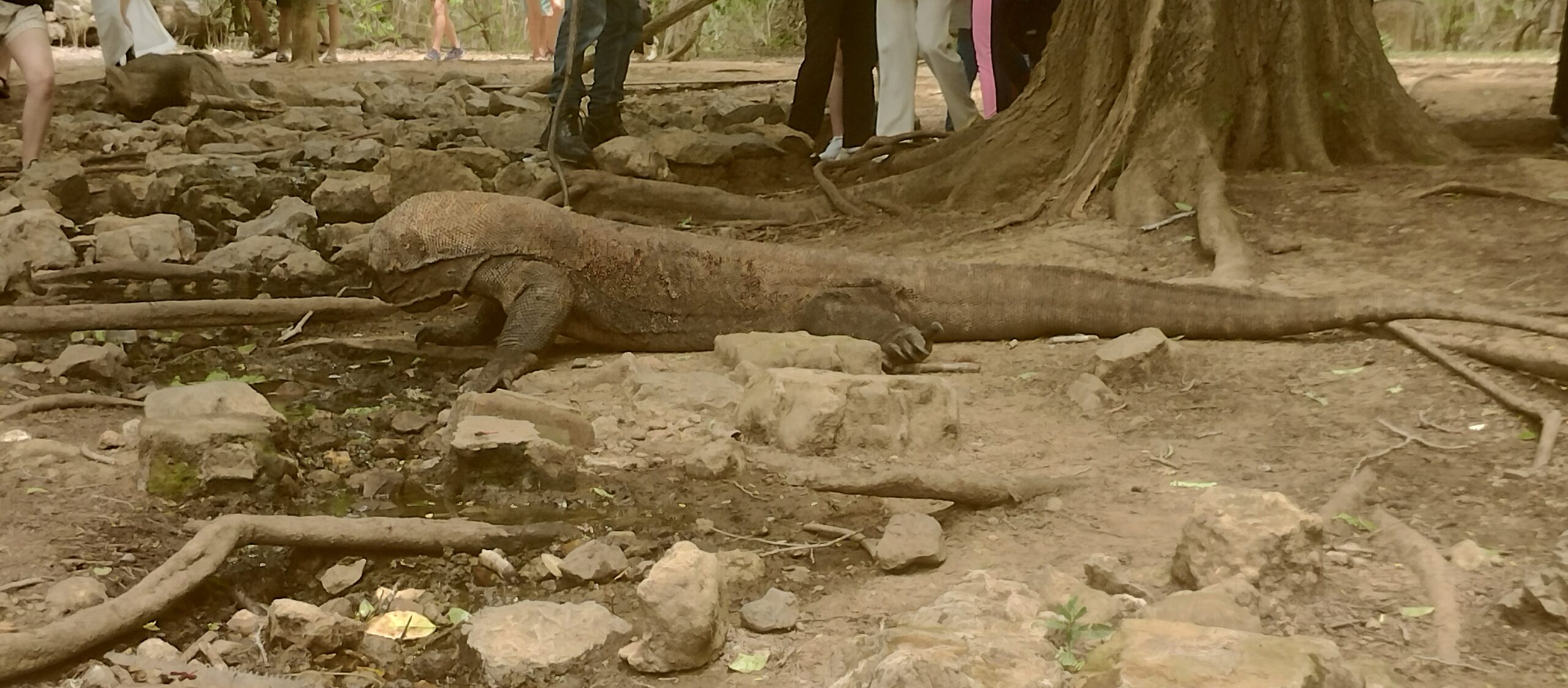
There were adult females down there too. Big, but smaller than I had built them up to be in my head.
There were also a lot of people crowded round them with cameras, and I did feel sorry for them.
You have probably seen the photo. Someone crouched directly behind a dragon, dragon head in the foreground, looks like they are inches away. That shot is staged. What I watched happening was a couple crouching several metres back, with a park ranger standing well in front of the dragon, and the camera angle doing the rest. It looks far closer than it is.
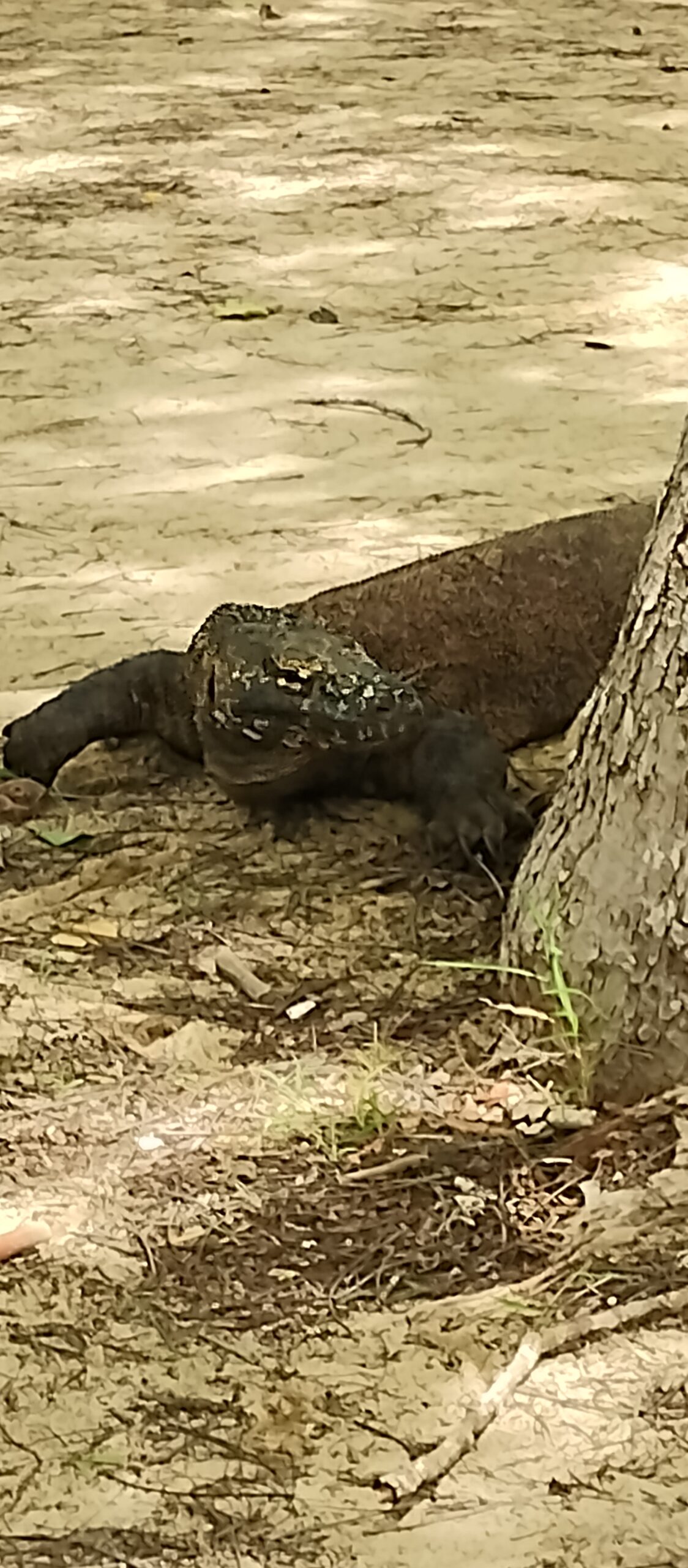
Then we walked inland with a guide, through the savanna and dry forest that covers most of the island (it is not jungle, whatever the brochures imply), and we found him.
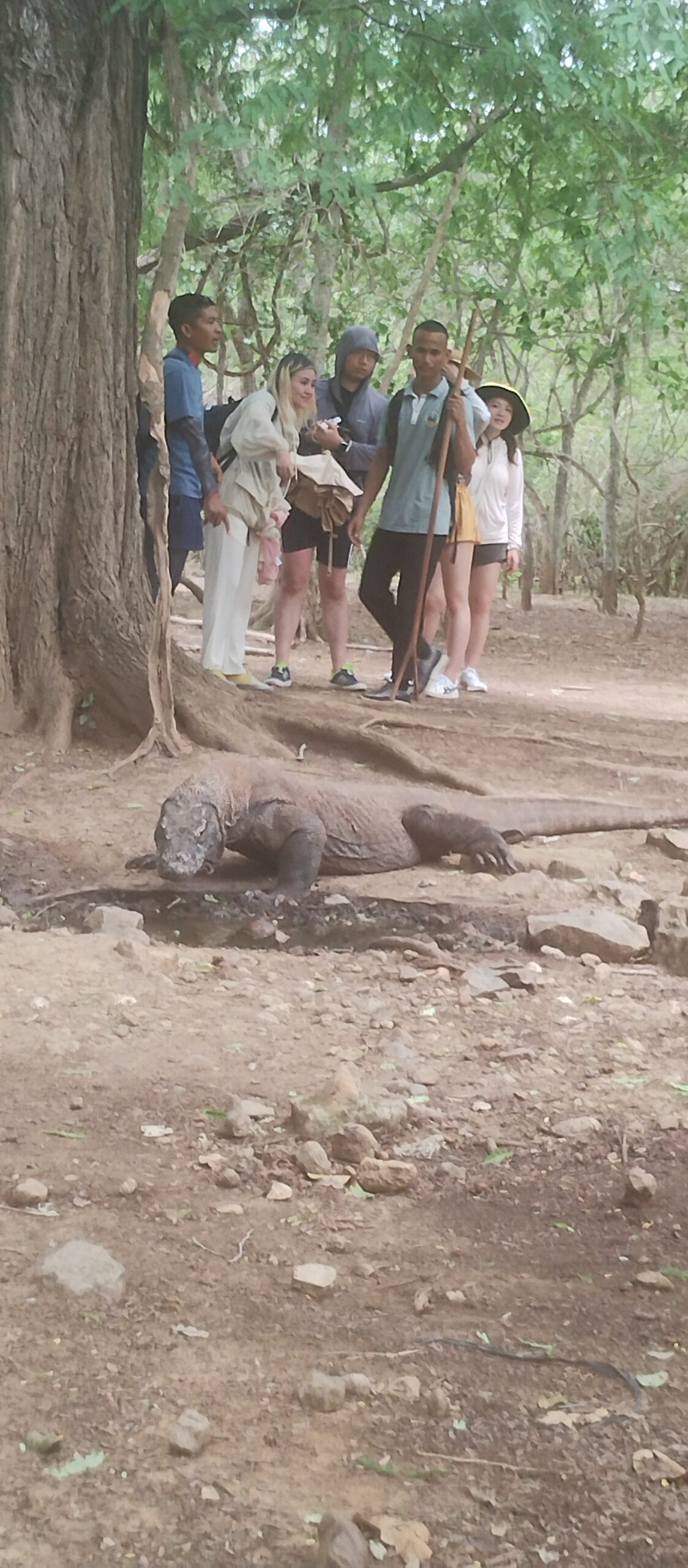
The biggest Komodo dragon I could have imagined. An absolute beast of a male. Our guide was thrilled, because apparently this one usually keeps well away from people, and here he was strolling out in front of us like he owned the path. Which, to be fair, he does.
We followed at a distance while he made his way down toward the beach, stopped at a little stream, and had a drink. That was the moment. Not the photo, not the size of him. Just a wild animal doing an ordinary wild animal thing while we stayed out of his way.
Word got round that he was out, and more people started heading over. When I looked at him properly, I thought I saw something a bit like apprehension in his eyes. Maybe I was projecting. But I felt for him.
One tourist tried to edge closer for a photo and got told off immediately. Get back. Get away from him. I would love to say that was about protecting the dragon, but it was almost certainly about protecting the tourist.
About those forked sticks
The guides carry long wooden poles with a fork at the end. They are called Y-sticks, and every ranger has one.
I asked. It is purely for our safety. If a dragon decides it wants to come your way, the ranger puts the fork in its path to redirect it. It is not a regular occurrence, and nobody was prodding or herding anything. But having seen the size of that male, I was quietly glad someone had one.
Worth knowing before you book: Komodo dragons can detect blood from a long way off. There is no official rule barring women from visiting while menstruating, despite what a lot of websites still claim, but rangers do ask that you tell them so they can position themselves accordingly. Tell your guide. It is not an exclusion, it is a precaution, and I would rather know than not.
The deer, which I was not expecting at all
Rewind to the start of the day, before any of the dragon business. Our first stop was Padar, and there were deer on the beach.
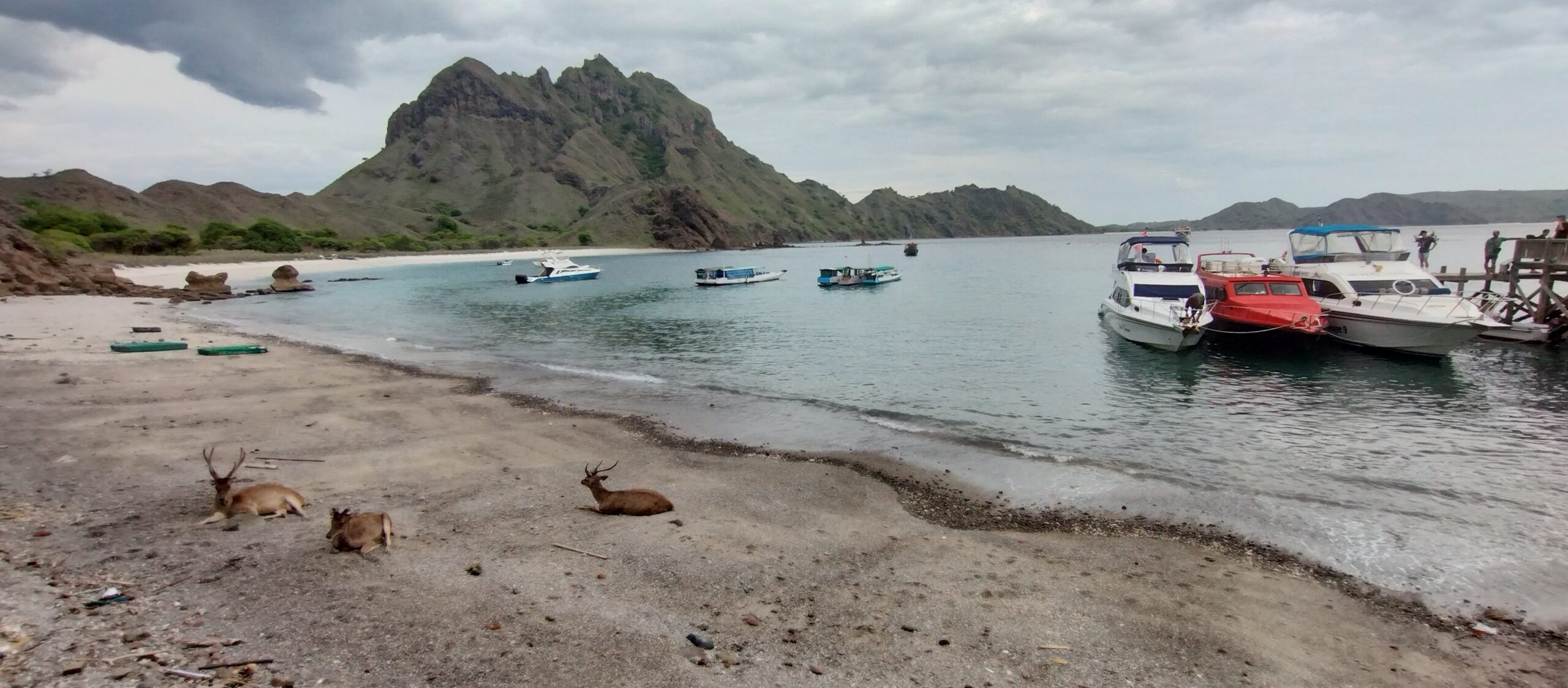
Timor deer, standing about on the sand like it was the most normal thing in the world. I had not read a single word about deer before this trip and they turned out to be one of my favourite parts of it.
Then I found out they swim between the islands.
Not paddling about in the shallows. Properly swimming, open water, crossings of several hundred metres through currents strong enough that a person would struggle. One documented crossing was around 600 metres. They do it because fresh water and decent grazing are scarce, so they go and find better, and the sea is simply in the way.
Here is the part that reframed the whole park for me: Timor deer are the Komodo dragons main prey. That is what the dragons are mostly eating.
So you have deer choosing to swim to islands full of the thing most likely to kill them, because the grazing is better. That is not a zoo exhibit. That is an ecosystem doing what it does, with nobody managing it for your benefit.
So is it ethical?
Yes. I think this is one of the good ones, and I do not say that often.
The dragons are wild. This is their island and we are visitors on it. Nothing is enclosed, nothing is fenced, nothing is fed for our benefit. They are free to walk away, and they do.
The part of the island tourists reach is a small section of it. They have the rest to themselves.
They gather on the beach where the people are, which initially bothered me, until I thought about it properly. If the crowds genuinely distressed them, the simplest thing in the world would be to go somewhere else. They have an entire island. They choose the beach.
Komodo Island was also spotlessly clean. No litter anywhere, and the guides were visibly serious about leaving nothing behind. That tells you something about how a place is run.
What I cannot tell you is what the rangers are like once the boats have gone. I was there for about two hours. I saw good practice in front of me, but I am not going to pretend one morning makes me an authority on the day to day running of the park, and anyone claiming otherwise on the basis of a single visit is overreaching.
What I can say is that the alternative is watching one behind glass in Sydney, and there is no version of that I would choose.
Two hours felt like enough, incidentally. I did not come away wishing I had longer with them. A hundred percent worth doing.
The rules that actually matter
None of this is complicated, and it applies to wildlife anywhere, not just here.
- Keep your distance. Ten metres is a decent rule of thumb.
- Do not touch anything. Do not chase anything. Do not try to make an animal look at you for a better photo.
- Do not do anything that changes what the animal would otherwise be doing. That is the whole principle, and everything else is a footnote to it.
- Use reef safe sunscreen if you are going in the water. Ordinary sunscreen does real damage to what is underneath you.
The manta rays, and how to make sure you actually get to swim with them
Snorkelling with manta rays was the other dream. Not a bonus, not a nice extra. One of the two reasons I was on that boat at all.
It was mentioned briefly in the itinerary, which is not the same thing as being guaranteed. So when we got on board I made it very clear to the crew that this was the thing I wanted, and they made sure it happened.
I would tell you to do the same. Check it is actually in the itinerary before you book, then say so again when you arrive. Mantas are wild animals and nobody can promise you anything, but there is a real difference between a crew who know you care and a crew who assume nobody does.
Because here is the thing. Our boat had about twenty people on it. Me and my partner were the only two who wanted to go in.
So we sat there already kitted up in our snorkel gear, looking faintly ridiculous, while the crew watched the water. When they spot mantas you have seconds. You either go now or you do not go.
Then one of the guides shouted: manta, jump, jump.
So we jumped.
Face in the water and there they were. Three of them, gliding along beneath me. This is deep water, at least ten metres, so there is no question of landing on top of them. Just clear blue and these enormous creatures moving through it.
Reef mantas run about three to four metres across, and some individuals in Komodo have been recorded over five. Big enough that majestic stops being a lazy word and starts being accurate.
I am rubbish at diving down. My partner is not, so he got closer while I stayed up top and followed them from above. We were not chasing them or cutting them off, just watching. They did not appear to care about us in the slightest, wings rolling up and down, entirely unbothered.
I got so absorbed that the boat very nearly clocked me on the head. Everyone on board was extremely patient about the two of us being out there for half an hour.
Seeing Komodo dragons and swimming with manta rays in the same day is, frankly, unreal.
The rest of the day
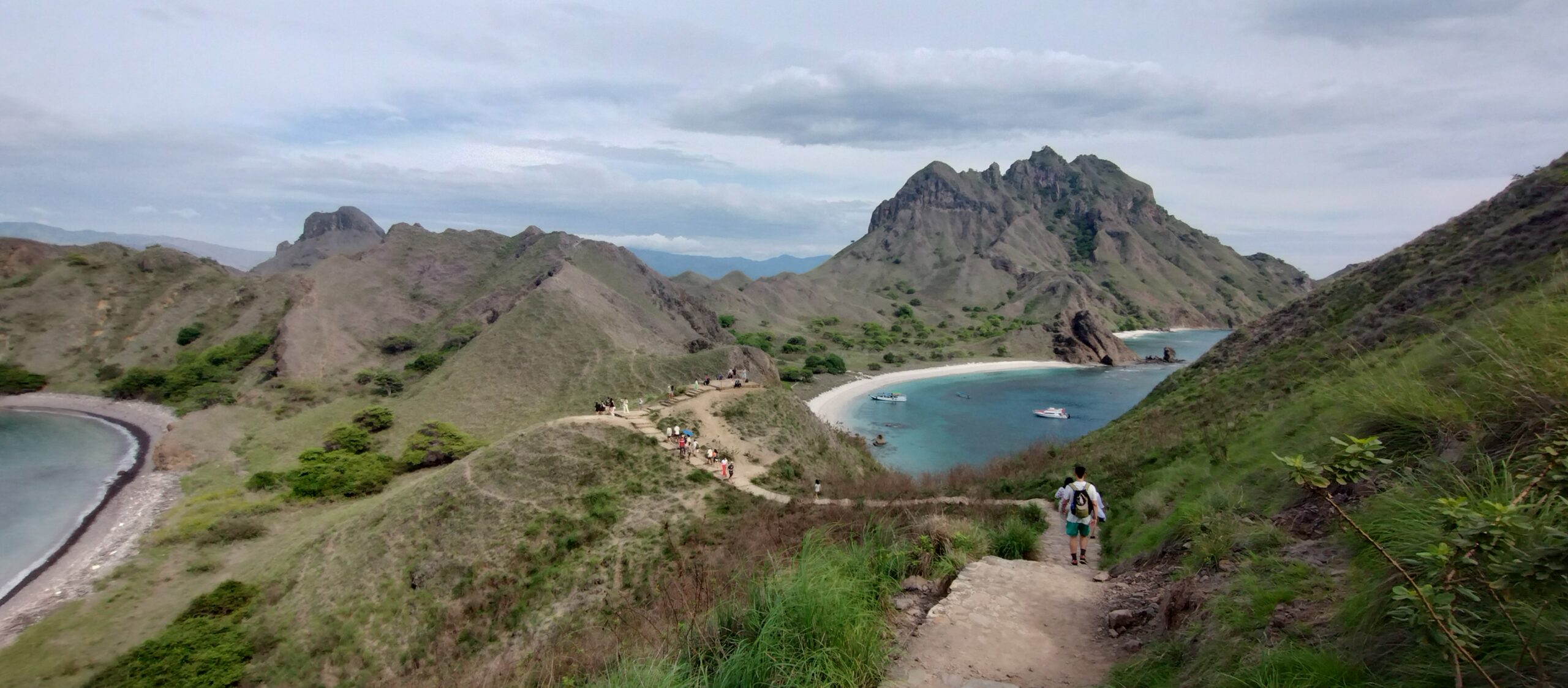
Padar Island first thing, for the viewpoint hike everyone photographs. Short walk, twenty to forty minutes up. Worth it.
Taka Makassar is a sandbar sitting in the open sea. Nothing there but sand and turquoise water. Ridiculous in the best way.
Pink Beach had a few little shacks selling coffee, which after a morning of dragons is exactly what you want.
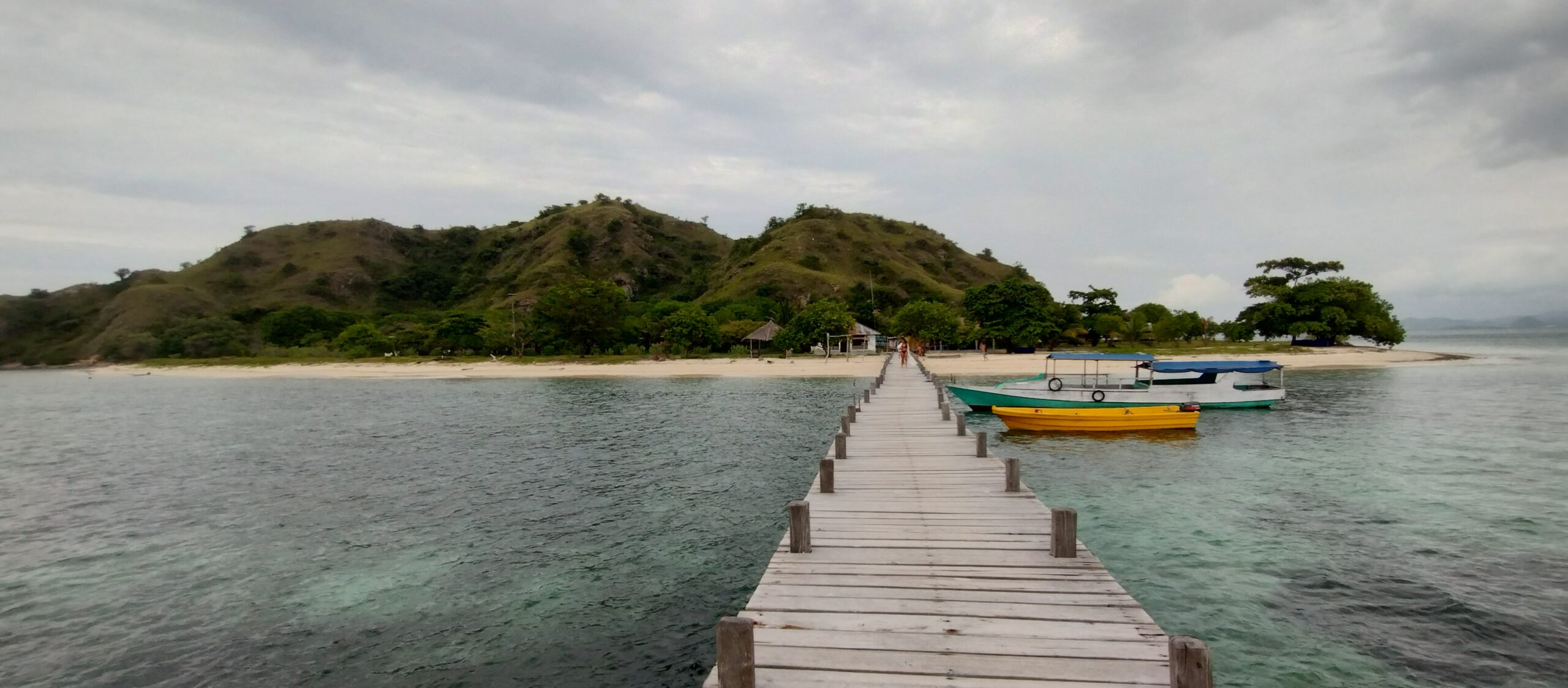
We stopped at Kanawa Island for snorkelling, the one with the long jetty. Honestly, the snorkelling there was disappointing. Not much coral, though plenty of tropical fish. I suspect you need to get further out to the more remote sites for the good stuff, which is another argument for the liveaboard.
We would normally have stopped somewhere else entirely, but the water was too choppy to get there. More on that below.
Mind you, after the dragons and the mantas, nothing was going to top it.
Going in January, which is rainy season
I went in January, and I would do it again, but you should know what you are gambling on.
January is rainy season. Boats get cancelled in bad weather, and that is not a rare event. A friend of mine went the same month and had trips cancelled outright, and when she did get out, the swell meant she could not land at Padar, which is the island with the famous viewpoint. That is the risk, and there is no way to plan around it beyond building in spare days.
I lost one snorkelling stop to choppy water, which was the spot I had most wanted, and that stung.
Everything else went perfectly. The weather was beautiful the day we went out. I saw the dragons and I swam with the mantas, which were the two things I came for.
And because it is off season, it was so much quieter. Fewer boats, fewer people around the dragons, more room everywhere. That is worth a lot, and not just for your photos. Smaller crowds are better for the animals too.
The other thing in January favour: it is peak manta season. The plankton blooms in the rainy season and the mantas turn up in numbers, roughly December to March.
So it is a trade. Bigger chance of losing a day to weather, better odds on mantas, and a park that does not feel overrun. I would take that deal again.
Eating vegan on a Komodo day trip
Short version: do not count on it.
The tour told me in advance that the boat would not be able to do vegan food, which I appreciated far more than being handed something I could not eat. So I asked them not to give me anything at all, and they made sure of it.
I am completely fine with this. Veganism is not a familiar concept everywhere and I am not going to be precious about it. What I cannot stand is being served a meal that goes straight in the bin. Better to be told honestly.
I had a look at what everyone else got, and the lunch boxes had eggs and bread in them, so it would not have worked anyway.
Bring your own food. Labuan Bajo has more vegan options than I expected for a town that size, including a vegan bakery that was genuinely excellent. Stock up the night before, and here is where to eat vegan in Labuan Bajo if you want the full list.
Good to know before you book
There are national park fees to pay on top of whatever your tour costs. There is an entrance fee, a marine park fee, a conservation fee, and a ranger fee for the guided walks. They change fairly regularly, so check the current rates when you book rather than trusting a number you read on a blog.
The important bit is whether your operator includes them. Some fold everything in and some do not, and that changes the real price of a trip considerably. Ask before you pay.
For what it is worth, I did this as part of a ten day trip called Best of Bali & Komodo Escape, run by Vio Travel and booked through TourRadar. I personalised it to skip the Bali beach days and spend that time in Ubud instead, which the operator was completely relaxed about.
The Komodo day is day nine, and it is exactly the run I have described above: Padar, the dragons, Pink Beach, Taka Makassar, Manta Point and Kanawa Island. Lunch on Komodo Island is a lunch box, which is the one I asked them to skip.
The best wildlife day I have ever had
I want to be clear about this, because I do not hand out superlatives often.
In one day I saw Komodo dragons in the wild, swam with manta rays, watched deer on a beach that swim between islands, and snorkelled through more tropical fish than I could count.
One day. No enclosures, no feeding, no animal doing anything it would not have done if I had stayed at home.
If you want a trip that packs a genuine wildlife punch, this is the one I would send you to. I have been to a lot of places and nothing else has come close for sheer density of it.
Would I do it again? Yes, but on a boat trip next time, for the snorkelling I missed.
The dragons were everything I wanted them to be. The mantas are what I will still be thinking about in ten years. Both wild, both free to leave, neither performing for anybody.
That is the whole reason I travel.