
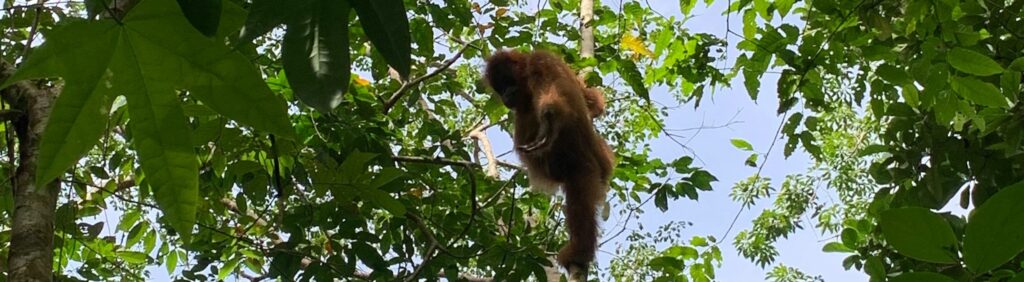
Here’s the thing nobody tells you before you book a jungle trek in Bukit Lawang: most of them are doing it wrong.
Not maliciously. The guides aren’t villains. But “ethical” gets thrown around like it costs nothing, and when you’re standing in the rainforest watching a guide coax an orangutan down from the canopy so someone can get a better photo, you realise the word doesn’t mean much without the actions behind it.
I went to Gunung Leuser National Park because I wanted to see Sumatran orangutans in the wild. Not performing. Not posing. Actually wild. And I spent weeks researching before I booked a single thing, because I wasn’t going to fly to Sumatra just to be part of the problem.
This is what I found, and what actually happened when I got there.
Bukit Lawang and Why It Matters
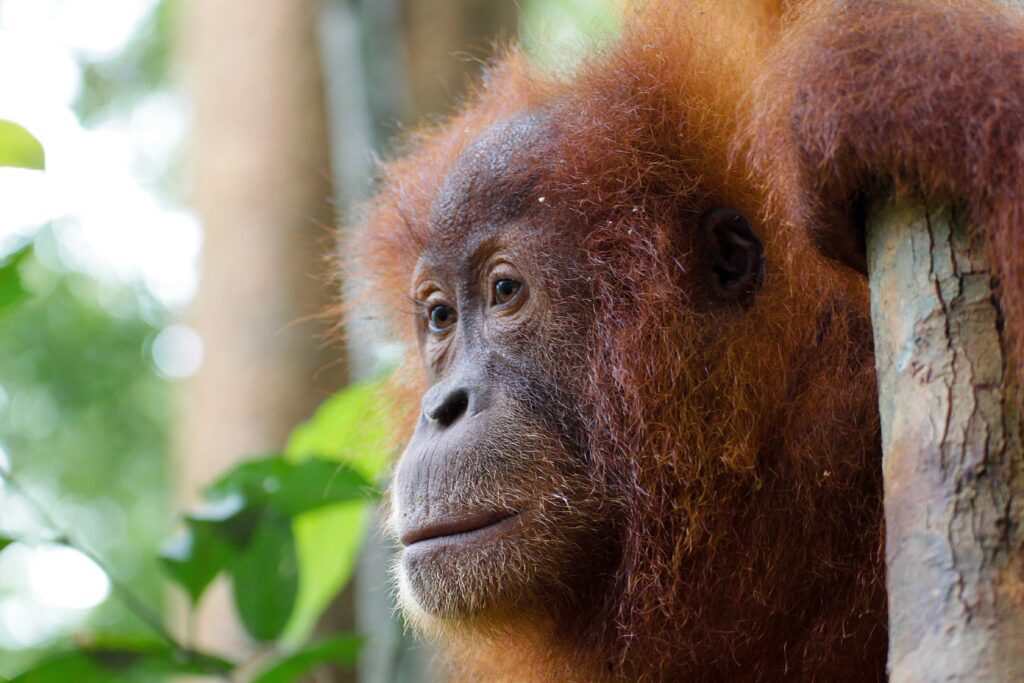
Bukit Lawang sits at the edge of Gunung Leuser National Park, one of only two places on earth where you can still see Sumatran orangutans living wild. It’s a UNESCO World Heritage site, a critical habitat, and home to around 5,000 of the approximately 14,000 Sumatran orangutans left on the planet.
That number stops me every time. Around 14,000. That’s it. The Sumatran orangutan is critically endangered: not “threatened”, not “vulnerable”. And the population has been declining for decades, driven by deforestation for palm oil plantations and the continuing illegal pet trade. They share 97% of their DNA with us, which also means they’re vulnerable to human diseases. Your mild cold can kill them.
Most of the orangutans you’ll encounter near Bukit Lawang are semi-wild: they went through a rehabilitation programme and were released back into the forest. They’ve had enough human contact to be more comfortable around people than truly wild populations. Which sounds like a good thing until you realise it’s also exactly what makes them vulnerable to what happens on unethical treks.
What Unethical Actually Looks Like
Nobody shows up to a jungle trek planning to harm an orangutan. That’s not how it works.
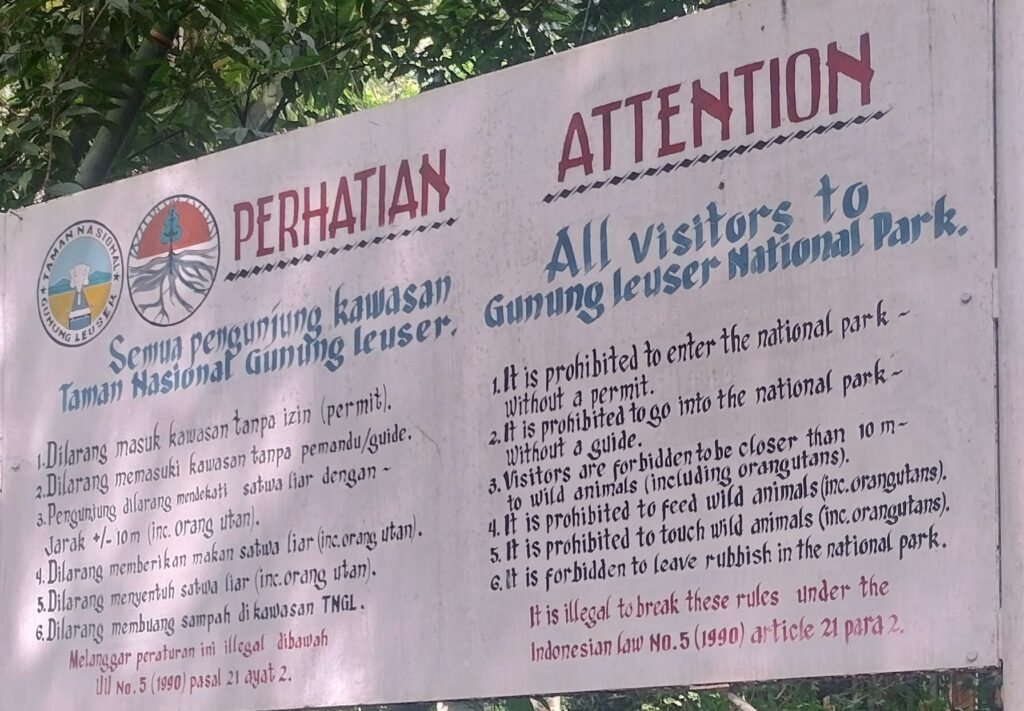
It’s subtler. It’s a guide who calls one down from the trees because a tourist wants a closer look. It’s lunch scraps left on the trail that train macaques to follow humans for food. It’s the flu you’re carrying that gets passed on through proximity.
On my trek, I watched another group’s guide do exactly what Green Hill’s guides would never do: lure an orangutan towards the path. The tourist got their photo. The orangutan learned, again, that humans mean food and proximity. That interaction will outlast the Instagram post by years.
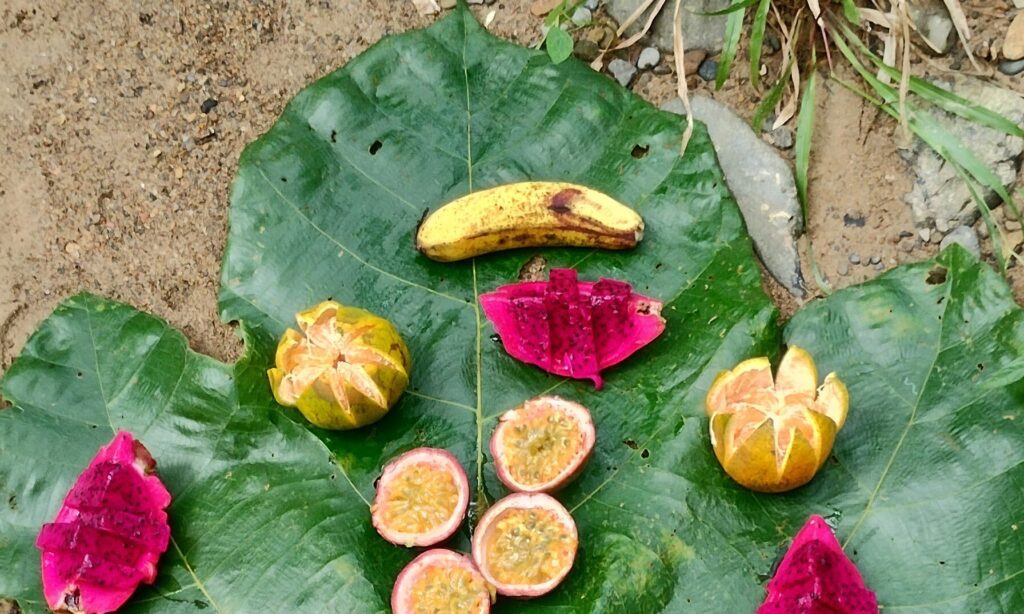
Feeding: even fruit, even accidentally leaving scraps. It creates dependency, spreads disease, and removes their drive to forage. It is one of the most damaging things a well-meaning traveller can do.
Getting them on the ground for photos: orangutans belong in the canopy. Any guide who gets one onto the ground for your convenience is prioritising your experience over their survival.
Food scraps on the trail: on my trek, I saw macaques scavenging through food left by previous groups. A direct violation of park rules, and a form of habituation that harms wildlife long-term.
For more detail on what the guidelines actually say, the Exploring Sumatra guide to choosing an ethical operator is worth reading alongside this.
Why I Chose Green Hill
I emailed a lot of companies before I booked. Most gave me the standard reassurances. Green Hill’s co-founder Andrea answered my vegan food question with a simple: yes, I am also vegan.
Small thing. But it told me something about how they actually operate versus how they present.
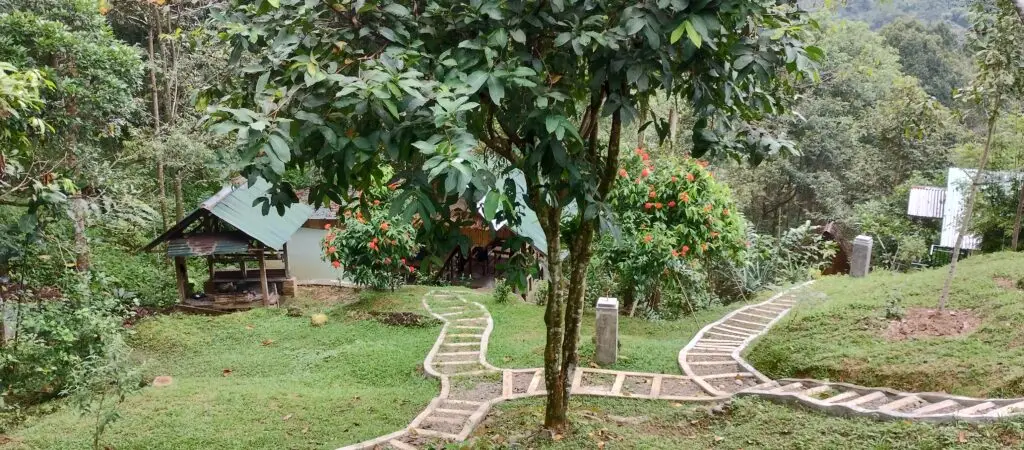
The more I looked into them, the more it stacked up. Andrea worked directly with local authorities to develop stricter wildlife protection guidelines. They’ve rewilded former palm oil plantation land. The eco-lodge itself sits on what used to be a plantation. They take former hunters and retrain them as guides, giving them a livelihood that depends on the forest surviving rather than being stripped. Their restaurant at the lodge is vegetarian, mostly vegan.
That’s not greenwashing. That’s what conservation actually looks like from the inside. You can read more about Andrea’s work in this Our Better World feature.
What Actually Happened on My Trek
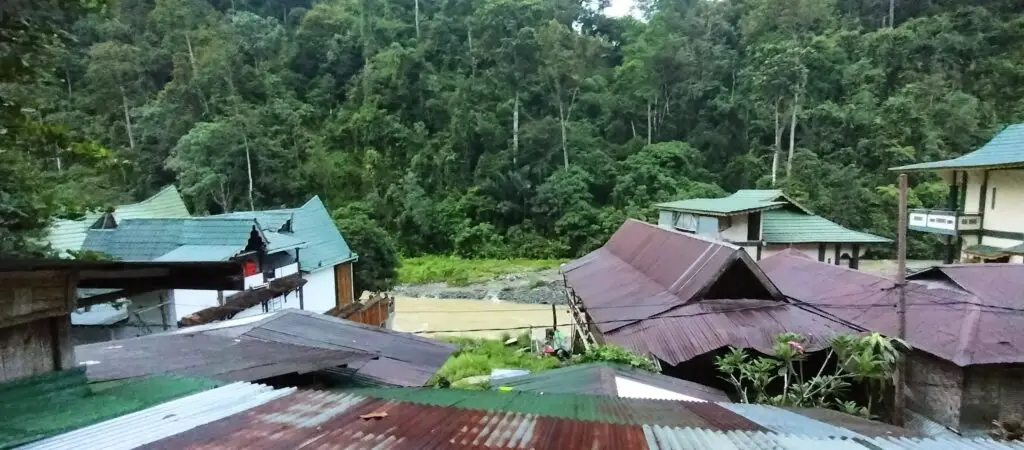
I chose Green Hill’s 2-day option: two different routes, one well-known trail where orangutans are more commonly spotted, and one quieter route that most tourists never see. My guides were Ando and Roy.
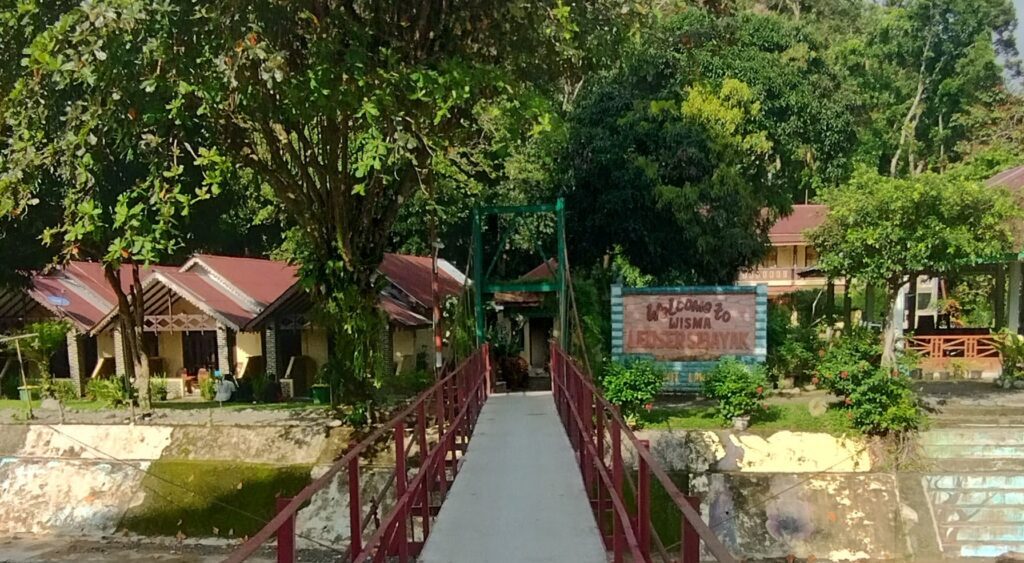
First day, well-known trail. I saw a juvenile male orangutan swinging through the canopy like he had somewhere extremely important to be. Mothers with babies resting in nests above. A hornbill. More leeches than I’d have liked.
There were also stark reminders of what unethical trekking looks like. Food scraps on the trail. A guide from another company coaxing an orangutan towards the group. Our guides moved us away immediately, because that’s what you do. You move away, not toward.
The second day took us deeper into the jungle, into the quieter parts of the park where you’re genuinely just a guest in someone else’s world. No other tourists. Just towering trees, the sounds of the forest, and the knowledge that you’re somewhere genuinely wild.
Then the rafting back. White water. Roy in the raft. Roy briefly not in the raft. Roy back in the raft. Chaotic. Brilliant.
Questions to Ask Before You Book
If a company hesitates on any of these, walk away:
Do you enforce a minimum 10-metre distance from all wildlife? What happens if an orangutan approaches the group? (Right answer: you move away.) How is food waste managed on the trek? Is feeding or touching wildlife ever permitted?
These aren’t trick questions. A genuinely ethical operator answers them immediately, because the answers are built into how they work.
Go. But Go Properly.
Bukit Lawang is one of the most extraordinary places I’ve been. The fact that you can walk into a rainforest and watch wild orangutans living their lives. That’s not something that should exist and probably won’t if we’re not careful about it.
Around 14,000 Sumatran orangutans remain in the wild. The species is critically endangered, with the next step being extinction. Tourism money is leverage: it funds either conservation or exploitation, and you get to decide which.
Ready to plan your trip? My complete Bukit Lawang travel guide has everything you need to know before you go. And if you want to know exactly what a 2-day ethical trek is actually like, I wrote that up too: Bukit Lawang Jungle Trek: What It’s Really Like.
